
Overview
A Diploma in Mechanical Engineering is a program that provides students with a strong foundation in the principles and practices of mechanical engineering. Throughout the course, students learn about various aspects of mechanical engineering, including design, analysis, manufacturing and maintenance of mechanical systems and components. They gain a deep understanding of fundamental subjects such as mechanics, thermodynamics, materials science, fluid mechanics, and machine design.
Scope
A wide range of career options is available in India for students who have completed in Mechanical Engineering. Those who wish to specialize in their field of interest can pursue further studies through master's degrees, diplomas, or certifications. Others may choose to enter the corporate world directly. Essential skills for success in this sector include problem-solving, critical thinking, and technical know-how. These skills enable graduates to perform tasks effectively and grow in their careers.
- Mechanical Engineer
- Design Engineer
- Aerospace Engineer
- Auto Research Engineer
- Robotics Engineer
- System Design Engineer
- Automotive Engineer
Vision
"Our vision is to provide world-class Mechanical Engineering education through innovative teaching and quality research, and to develop competent engineers with professional skills, ethical values, and social responsibility."
Mission
- To set and maintain the standard of education for addressing broad-based mechanical engineering related problems.
- To make continuous efforts to deal with the multi-disciplinary technological challenges of industry and society.
- To create a sense of social responsibility among learners.
Program Outcomes (POs)
- PO1: Basic and Discipline-specific knowledge: Apply knowledge of basic mathematics, science and engineering fundamentals and an engineering specialization to solve the engineering problems.
- PO2: Problem analysis: Identify and analyse well-defined engineering problems using codified standard methods.
- PO3: Design/ development of solutions: Design solutions for well-defined technical problems and assist with the design of systems components or processes to meet specified needs.
- PO4: Engineering Tools, Experimentation, and Testing: Apply modern engineering tools and appropriate technique to conduct standard tests and measurements.
- PO5: Engineering practices for society, sustainability and environment: Apply appropriate technology in the context of society, sustainability, environment and ethical practices.
- PO6: Project Management: Use engineering management principles individually, as a team member or as a leader to manage projects and effectively communicate about well-defined engineering activities.
- PO7: Life-long learning: Ability to analyse individual needs and engage in updating in the context of technological changes.
Faculty Profile



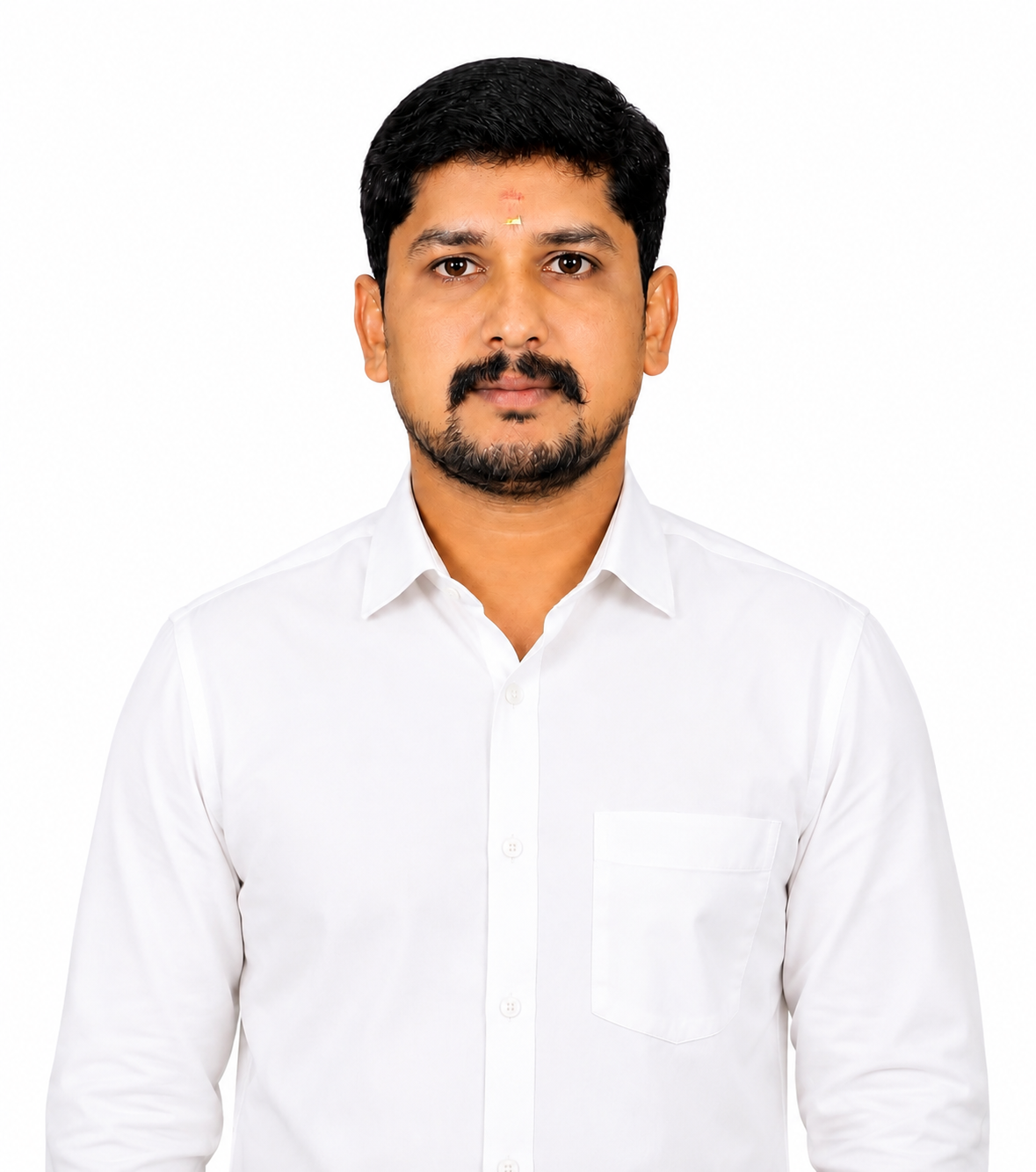
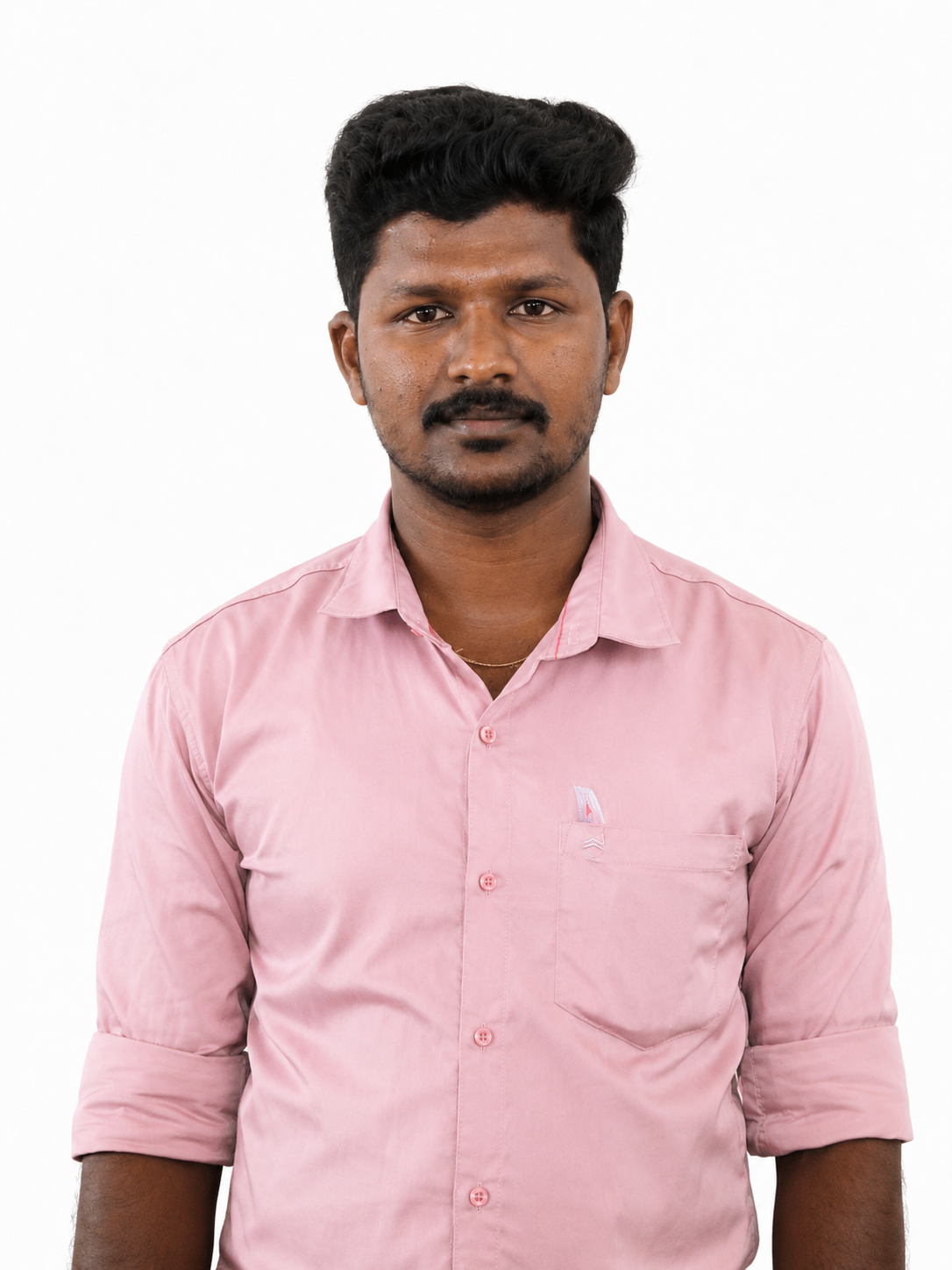


Faculty Profile
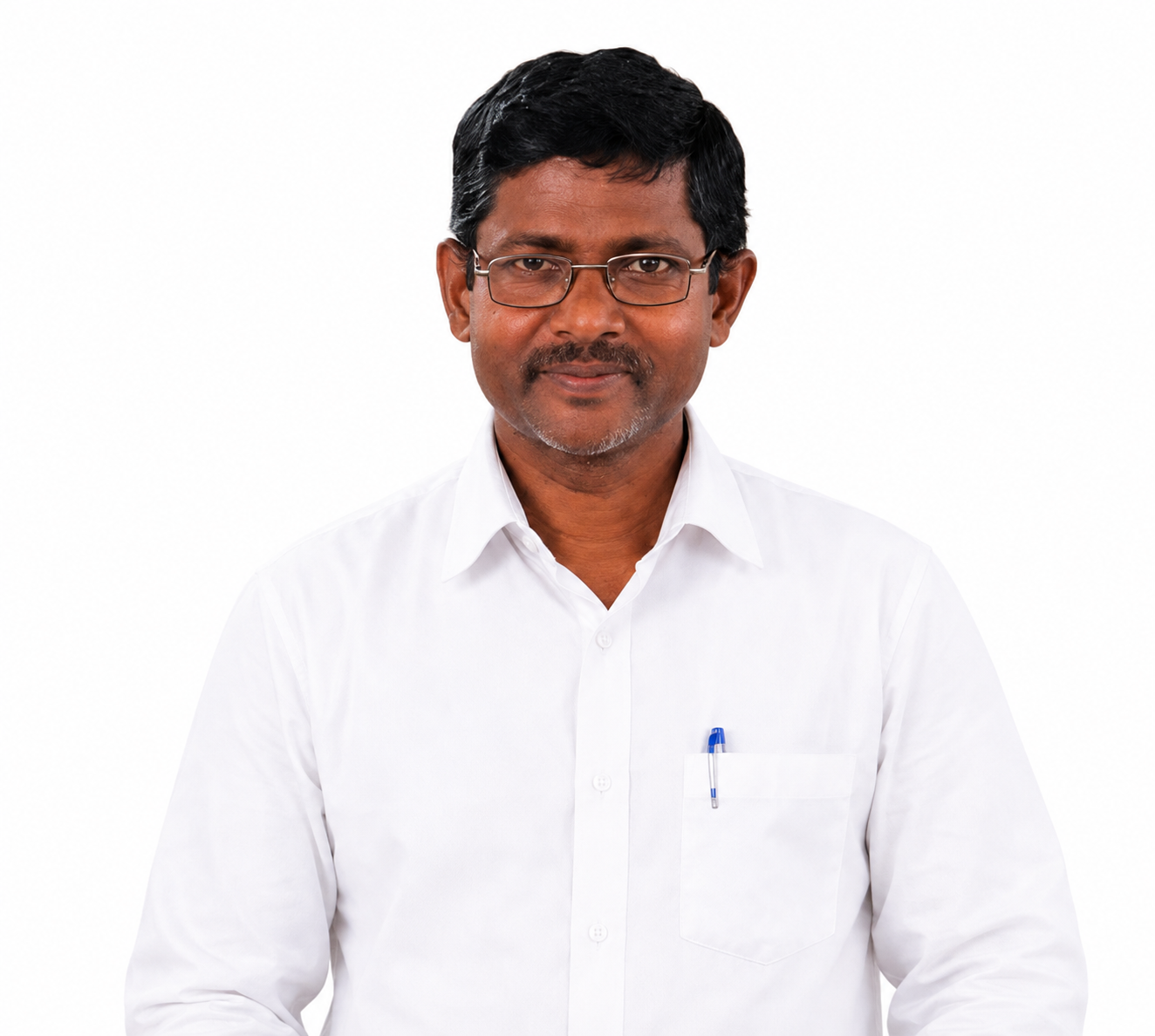
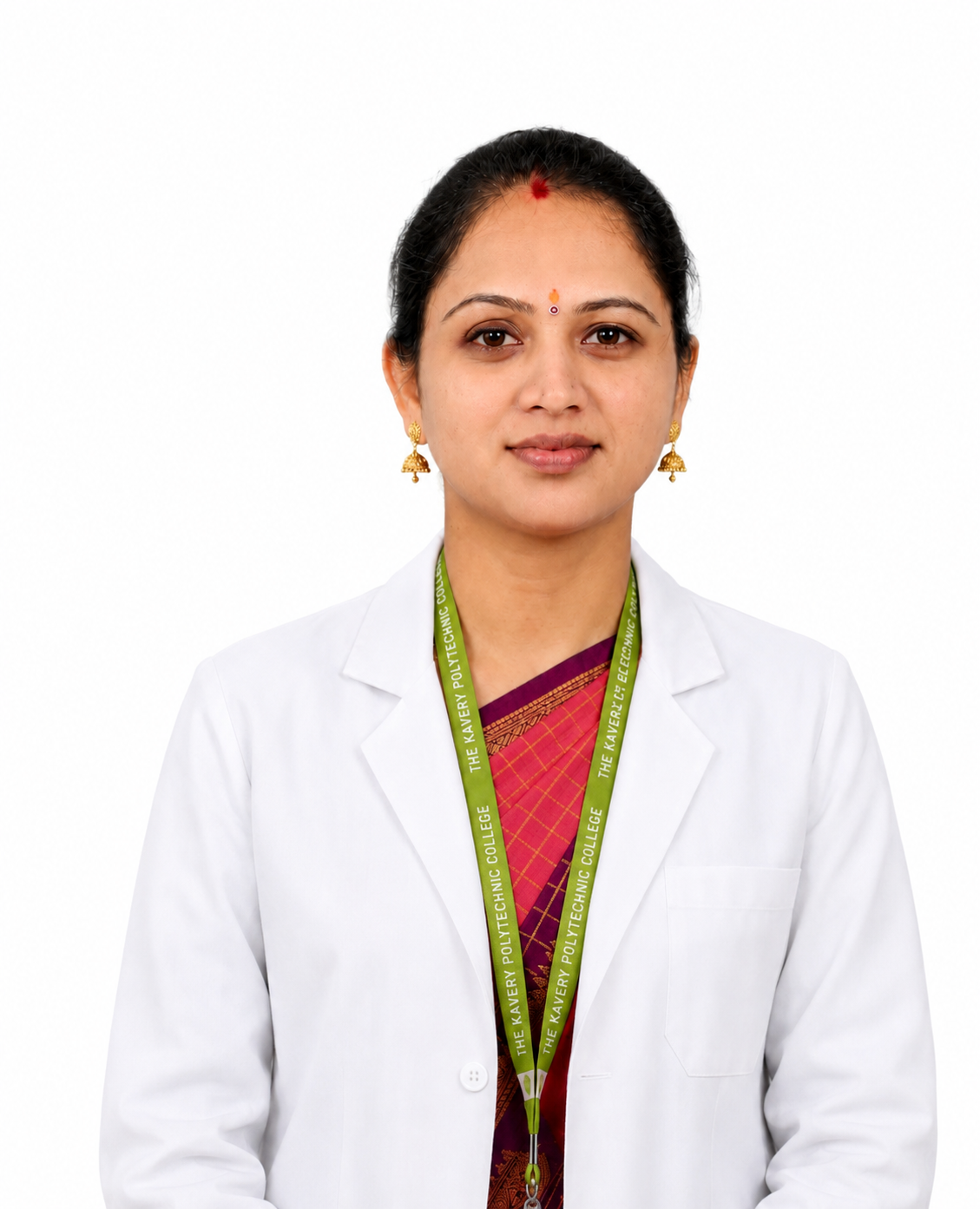
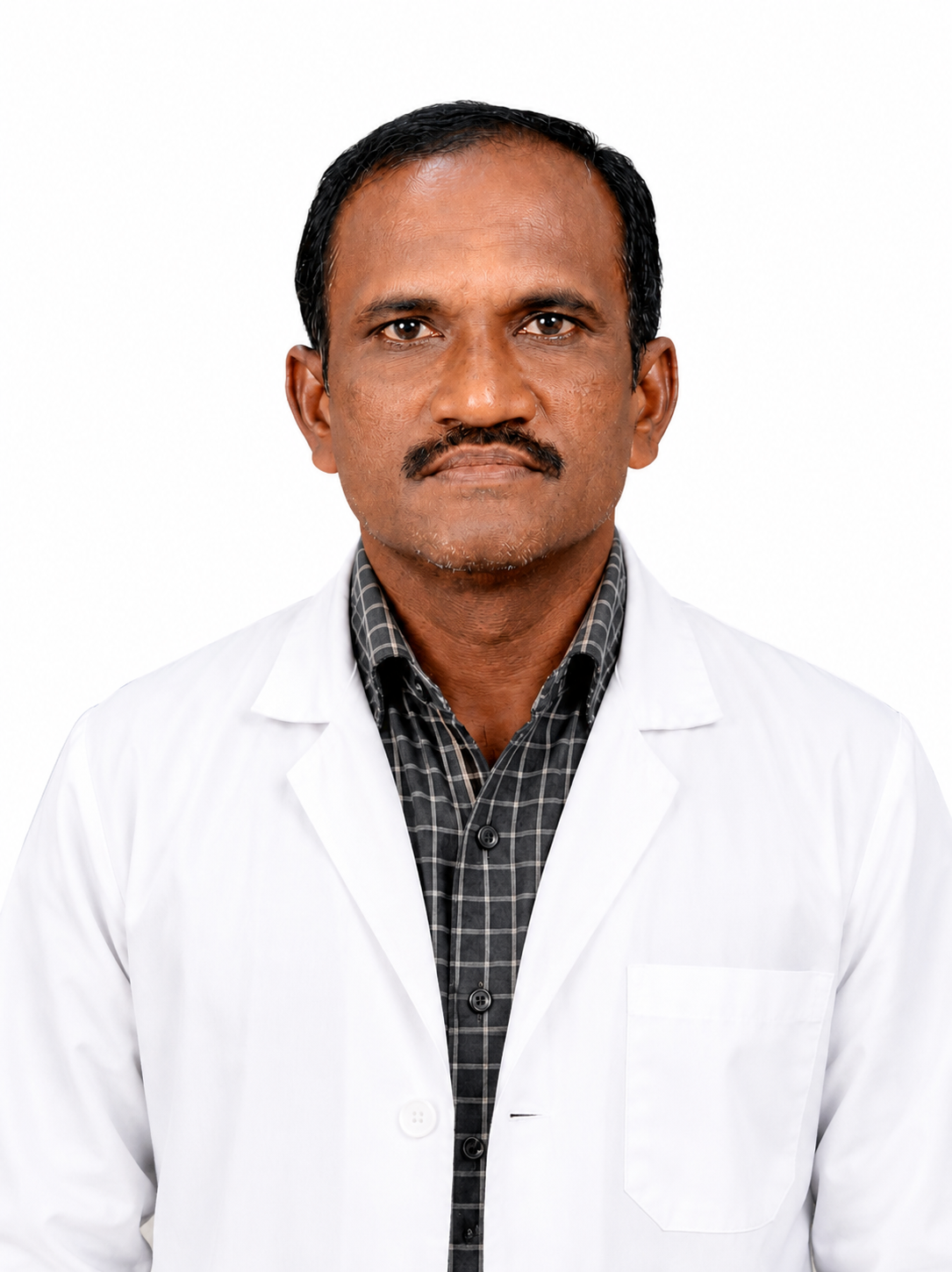
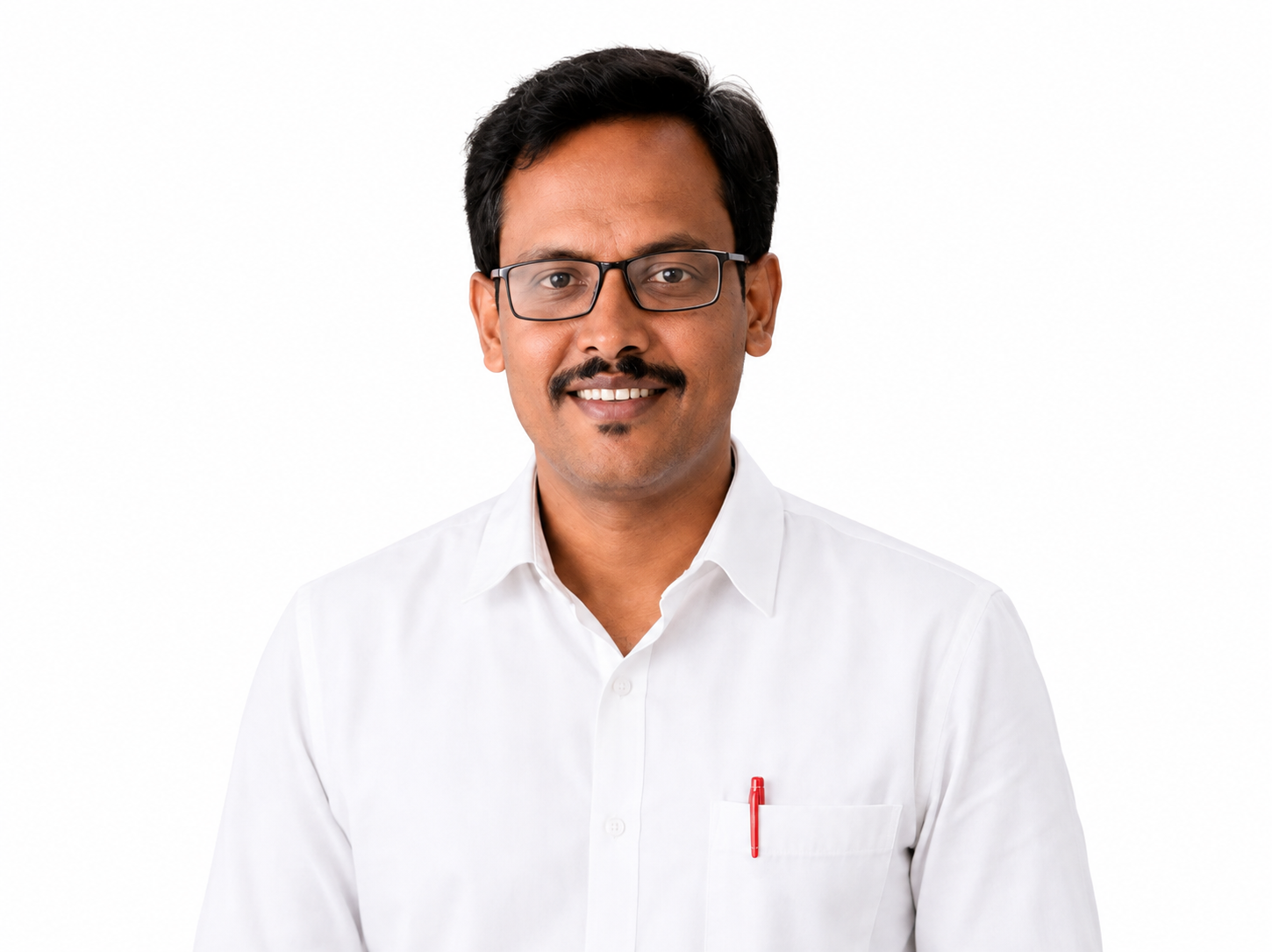
Laboratories
The labs have all the required equipment to give good practical training to the students. With a team of able and efficient teaching and workshop staff and fully equipped labs, we ensure that our students are well trained and sent out to catch any challenging opportunities. The department of Mechanical Engineering is well equipped with various modernized Laboratories as shown below:
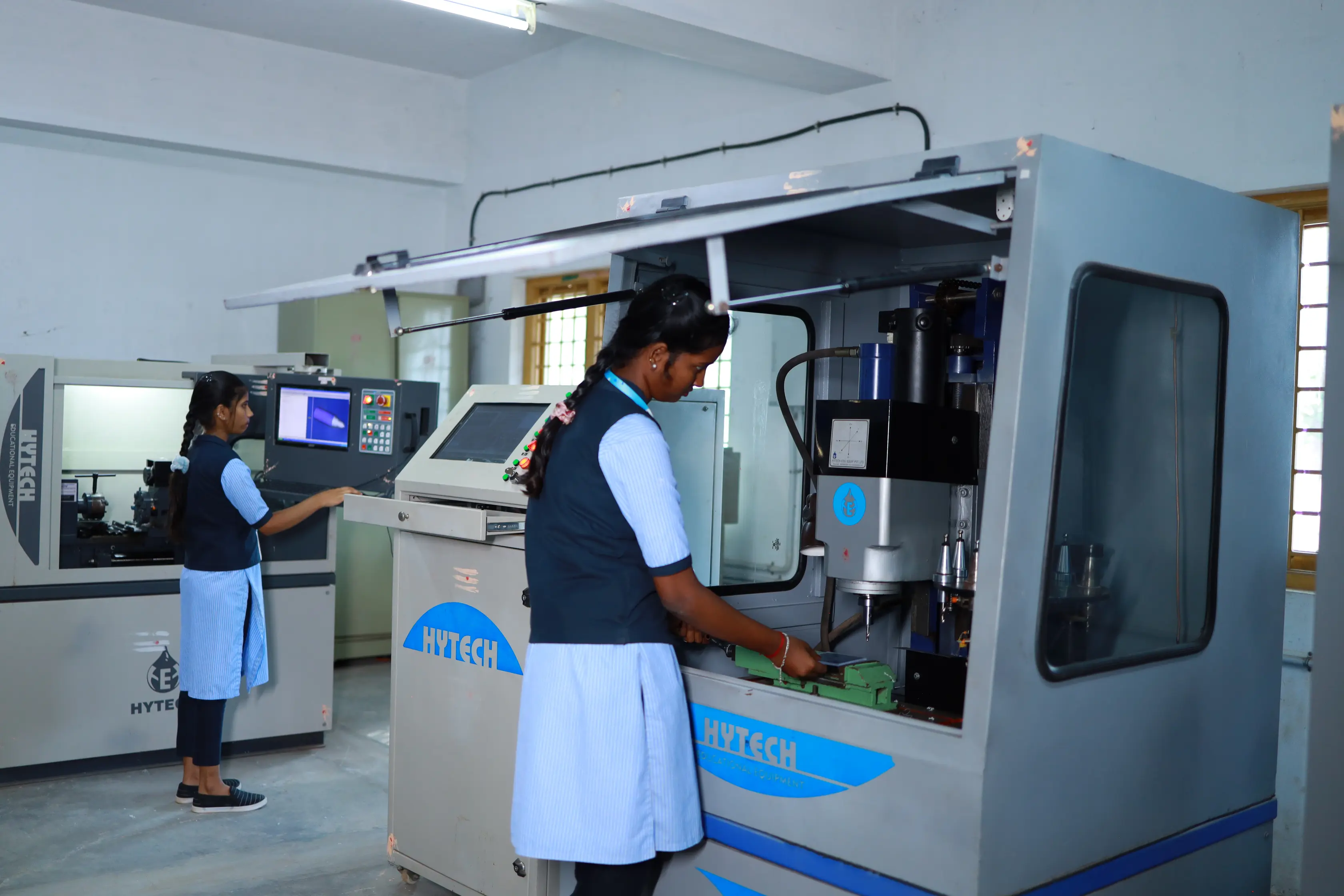
The lab serves as an essential component of the mechanical engineering curriculum, providing students with practical insights into the operation of CNC machines. The basic principle of NC technology has been one of the manufacturing major development in past 50 years. However, the number of function and task allocated to the controller has grown steadily over the years and now offer high level of automation.
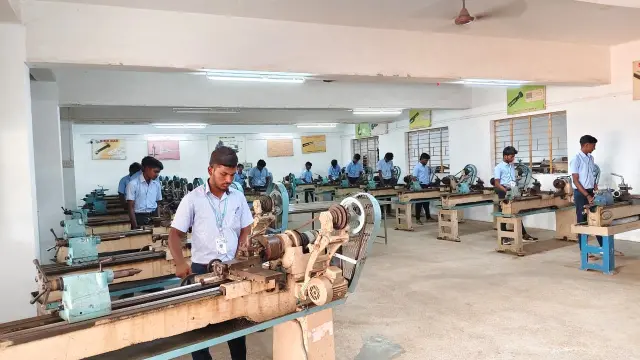
A practical workshop designed for teaching material removal processes. Students learn to operate center lathes, performing operations like turning, facing, threading, and drilling to shape cylindrical metal parts (like mild steel) into precise components. It emphasizes manual machining skills, tool setup, and machine safety.
Enables students to analyze thermodynamic principles, combustion, and heat transfer through hands-on experimentation. It features IC engines, boilers, refrigeration systems, and compressors to measure performance parameters like efficiency and power. Key activities include conducting performance tests, heat balance, valve timing, and fuel testing.
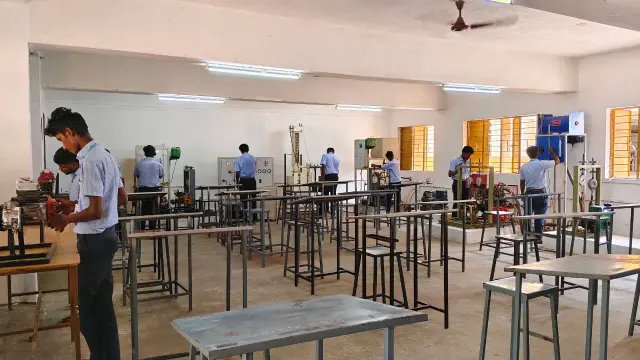
Provide hands-on experience in fundamental manufacturing and metalworking processes. These labs are designed to train students in material casting, forging (plastic deformation), and joining techniques.
Provides hands-on training on advanced machining and specialized production tools, focusing on manufacturing processes, tool geometry, and precision engineering. Key equipment typically includes milling machines, surface/cylindrical grinders, slotters, shaper machines, and gear cutting tools to demonstrate various machining operations.
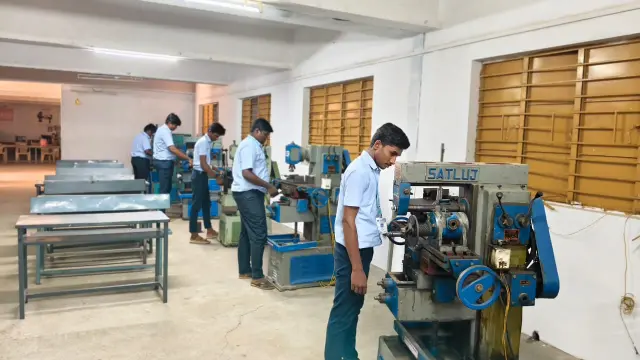
Offers hands-on experience in automotive systems, covering engine design, transmission, braking, steering, and suspension. It features cut-section models, live engines, and diagnostic tools to help students understand construction, operation, and maintenance, bridging the gap between theoretical principles and practical vehicle technology.
Focuses on training students in 2D drafting and 3D modeling for industrial design using Autodesk AutoCAD. It covers essential skills including geometric construction, dimensioning, layering, and creating engineering assemblies. Students gain practical experience in producing detailed technical drawings, orthographic projections, and 3D models.
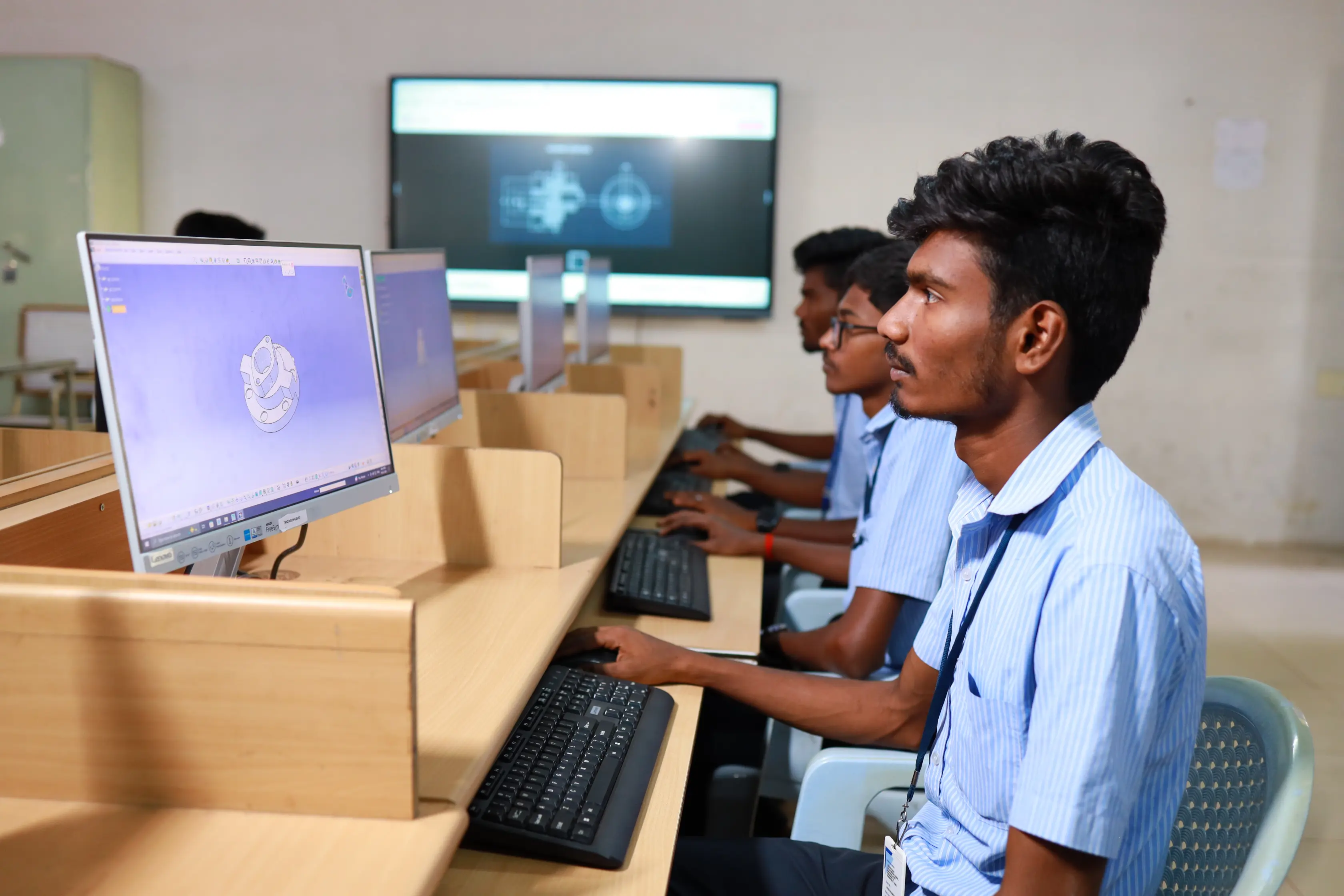
Focuses on evaluating the mechanical properties of materials—such as strength, ductility, hardness, and toughness—under various loading conditions. Experiments involve using specialized machinery to apply tensile, compressive, shear, torsion, and bending loads, providing essential data for structural design and material selection.
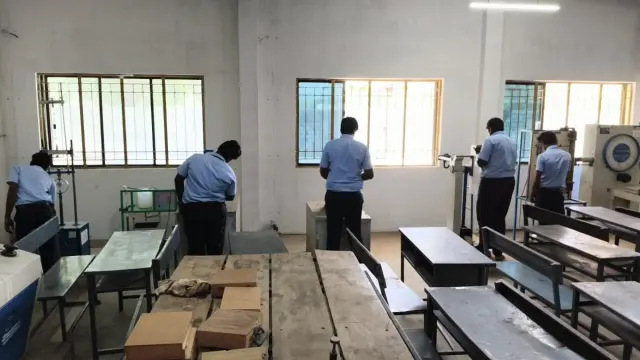
Provides hands-on experience in analyzing fluid statics, kinematics, and kinetics. Students use apparatus like Bernoulli's theorem demonstrators, Venturi meters, and Reynolds apparatus to study flow behavior, pressure, velocity, and losses. Experiments focus on measuring flow rates, pipe friction, and hydraulic machine performance.
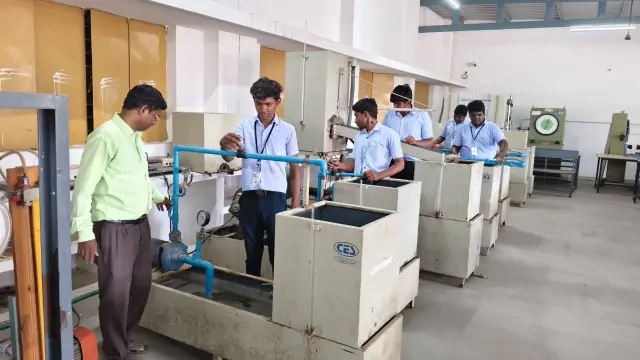
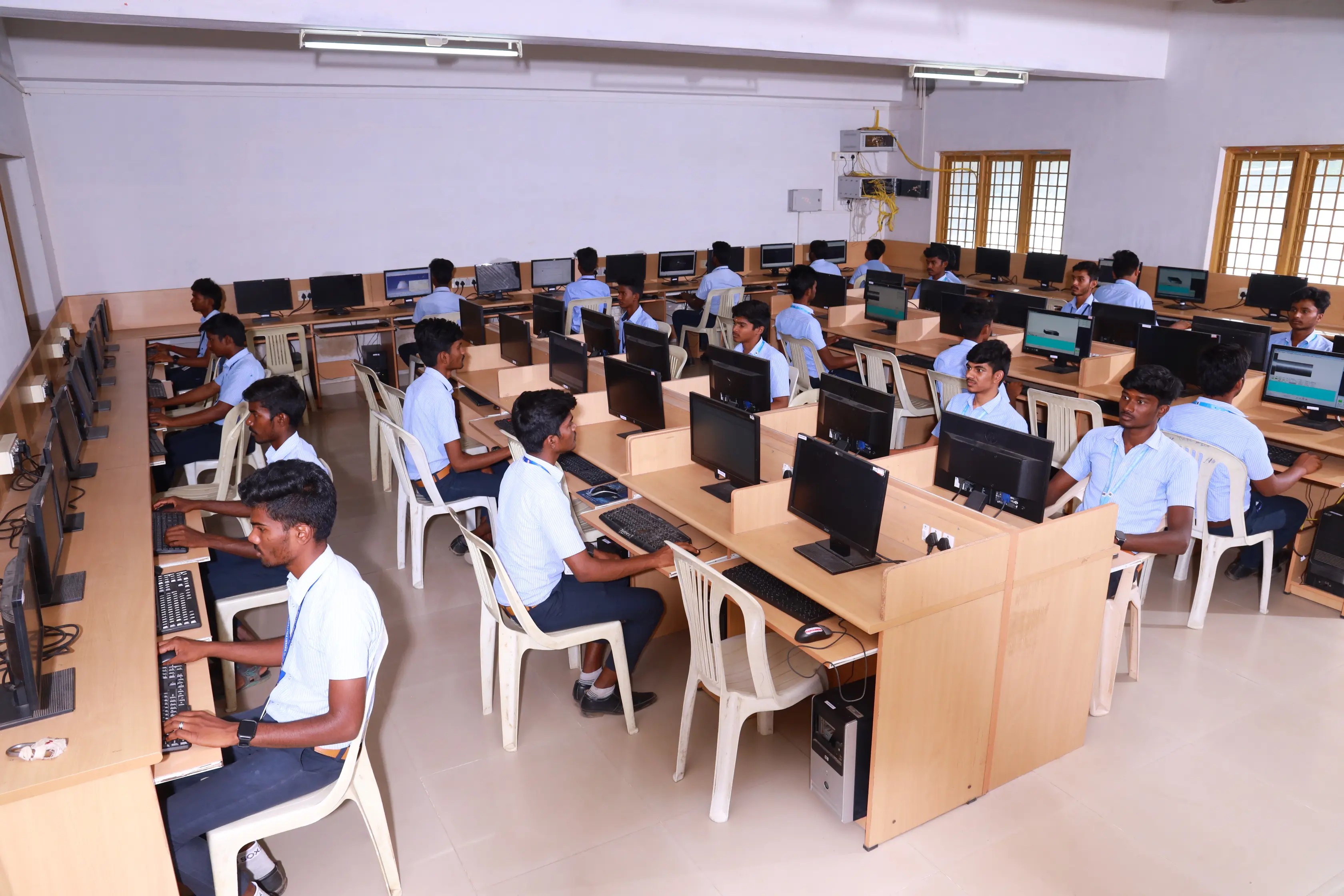
A specialized facility integrating computer-aided design (CAD) software with manufacturing systems (CAM) to teach 2D/3D component modeling, engineering analysis (CAE), and numerical control (NC) programming for CNC machines. It provides workstations for design and simulation, bridging theoretical design with practical CNC machining.
A hands-on training facility where students apply engineering theory to practical manufacturing, fabrication, and repair tasks. It provides essential skills in operating traditional machinery and hand tools across various trades, including machining, welding, fitting, and carpentry, usually focusing on fabrication from technical designs.
Student Achievements
2025-26 Odd Semester
| S.No | Student Name | Sem / Year | CGPA |
|---|---|---|---|
| 1 | ARULKUMAR A | III / II | 10 |
| 2 | ENBARAJ S | III / II | 9.75 |
| 3 | AJAY R | III / II | 9.625 |
| 4 | KARTHI R | V / III | 10 |
| 5 | BALAMURUGAN P | V / III | 9.875 |
| 6 | EZHUMALAI M | V / III | 9.875 |
2024-25 Even Semester
| S.No | Student Name | Sem / Year | CGPA |
|---|---|---|---|
| 1 | GOWTHAM S | IV / II | 10 |
| 2 | BALAMURUGAN P | IV / II | 10 |
| 3 | KARTHI R | IV / II | 10 |
| 4 | PRAVEENKUMAR R | VI / III | 9.2 |
| 5 | GOPINATH M | VI / III | 9.15 |
| 6 | KALAISELVAN K | VI / III | 9.15 |
2024-25 Odd Semester
| S.No | Student Name | Sem / Year | CGPA |
|---|---|---|---|
| 1 | TAMILKUMARAN S | III / II | 9.83 |
| 2 | BALAMURUGAN P | III / II | 9.67 |
| 3 | PRAVEENKUMAR N | III / II | 9.5 |
| 4 | PRAVEENKUMAR R | V / III | 9.3 |
| 5 | GOPINATH M | V / III | 9.2 |
| 6 | KALAISELVAN K | V / III | 9.1 |
2023-24 Even Semester
| S.No | Student Name | Sem / Year | CGPA |
|---|---|---|---|
| 1 | MEIYARASAN K | IV / II | 8.3 |
| 2 | KALAISELVAN K | IV / II | 8.2 |
| 3 | PRAVEENKUMAR R | IV / II | 7.9 |
| 4 | MUKESH P | VI / III | 9.6 |
| 5 | HARISH S | VI / III | 9.6 |
| 6 | MANIMUTHU T | VI / III | 9.4 |
2023-24 Odd Semester
| S.No | Student Name | Sem / Year | CGPA |
|---|---|---|---|
| 1 | MEIYARASAN K | III / II | 8.6 |
| 2 | KALAISELVAN K | III / II | 8.4 |
| 3 | PRAVEENKUMAR R | III / II | 8.2 |
| 4 | MAYAKKANNAN P | V / III | 8.8 |
| 5 | SANGEETH A | V / III | 8.6 |
| 6 | MANIMUTHU T | V / III | 8.6 |
Placements
Diploma in Mechanical Engineering graduates have strong placement prospects, with typical starting salaries around ₹1.5–3.8 Lakhs per annum. Major employers include manufacturing, automotive, and PSU sectors, with roles such as production supervisor, maintenance engineer, and design technician. Top firms often hire directly from polytechnic campuses.
2025-26
| S.No | Company | Salary/Month | No. of Students Placed |
|---|---|---|---|
| 1 | Aditya Birla | ₹27,500 | 2 |
| 2 | TITAN | ₹27,083 | 4 |
| 3 | Capgimini | ₹27,083 | 8 |
| 4 | Alstom | ₹25,000 | 19 |
| 5 | Motherson | ₹25,000 | 10 |
| 6 | Nexteer | ₹25,000 | 41 |
| 7 | Hyundai Motors | ₹25,000 | 75 |
| 8 | DIA | ₹21,417 | 17 |
| 9 | TAFE | ₹20,833 | 8 |
| 10 | YAMAHA Motors | ₹20,833 | 36 |
| 11 | L&T | ₹20,833 | 20 |
| 12 | PON PURE CHEMICAL | ₹20,833 | 2 |
| 13 | Royal Enfield | ₹20,833 | 24 |
| 14 | MRF | ₹20,500 | 7 |
| 15 | SPIC | ₹20,000 | 11 |
| 16 | Magna | ₹20,000 | 20 |
| 17 | Genau Extrusions | ₹20,000 | 12 |
| 18 | Turbo | ₹18,750 | 26 |
| 19 | Vocon Manufacturing | ₹18,000 | 8 |
| 20 | NOKIA | ₹17,000 | 11 |
| 21 | OPEL | ₹16,667 | 14 |
| Total Placements | 375 | ||
2024-25
| S.No | Company | Salary/Month | No. of Students Placed |
|---|---|---|---|
| 1 | SPIC | ₹29,167 | 3 |
| 2 | Kanji Karpuram | ₹25,417 | 10 |
| 3 | Damara Gold | ₹25,000 | 4 |
| 4 | Hyundai | ₹22,083 | 50 |
| 5 | Motherson Automotive Technologies & Engineering | ₹20,833 | 35 |
| 6 | TVS Sundaram Clayton | ₹20,833 | 25 |
| 7 | IM Gears | ₹20,500 | 9 |
| 8 | Genau Extrusion's | ₹20,000 | 18 |
| 9 | SFO Technologies | ₹20,000 | 1 |
| 10 | MRF | ₹18,750 | 46 |
| 11 | Royal Enfield, Cheyar | ₹18,750 | 12 |
| 12 | TAFE | ₹18,750 | 12 |
| 13 | L&T | ₹18,000 | 17 |
| 14 | Joyson Anand Abhishek Safety System's | ₹17,583 | 11 |
| 15 | Madras Engineering Industries | ₹16,667 | 36 |
| 16 | KNITVEL Needles | ₹16,667 | 4 |
| 17 | Borg Warner Cooling System | ₹16,667 | 22 |
| Total Placements | 315 | ||
2023-24
| S.No | Company | Salary/Month | No. of Students Placed |
|---|---|---|---|
| 1 | SUPER AUTO FORGE | ₹31667 | 12 |
| 2 | GOMADHI | ₹25000 | 10 |
| 3 | AQUASUB | ₹20833 | 35 |
| 4 | TAL(TAFE Access) | ₹20833 | 8 |
| 5 | YAMAHA MUSICS | ₹20000 | 28 |
| 6 | ABI SHOWATECH | ₹20000 | 10 |
| 7 | HYUNDAI | ₹20000 | 28 |
| 8 | ASCENT CIRCUIT | ₹17500 | 20 |
| 9 | GESCO HEALTHCARE PVT LTD | ₹17500 | 4 |
| 10 | HINDUSTAN FOODS | ₹16667 | 4 |
| 11 | INDIA NIPPON | ₹16667 | 16 |
| 12 | MARICO | ₹16667 | 3 |
| 13 | NSK BEARING | ₹16667 | 1 |
| 14 | TAFE | ₹16667 | 18 |
| 15 | TVS CLAYTON | ₹16667 | 31 |
| 16 | TVS CLAYTON,HOSUR | ₹16667 | 6 |
| 17 | KANJI KARPURAM | ₹16667 | 8 |
| 18 | L&T | ₹16667 | 11 |
| 19 | KK_SAKTHI IND | ₹12500 | 6 |
| Total Placements | 259 | ||
Placement Gallery


Events & NSS Activities
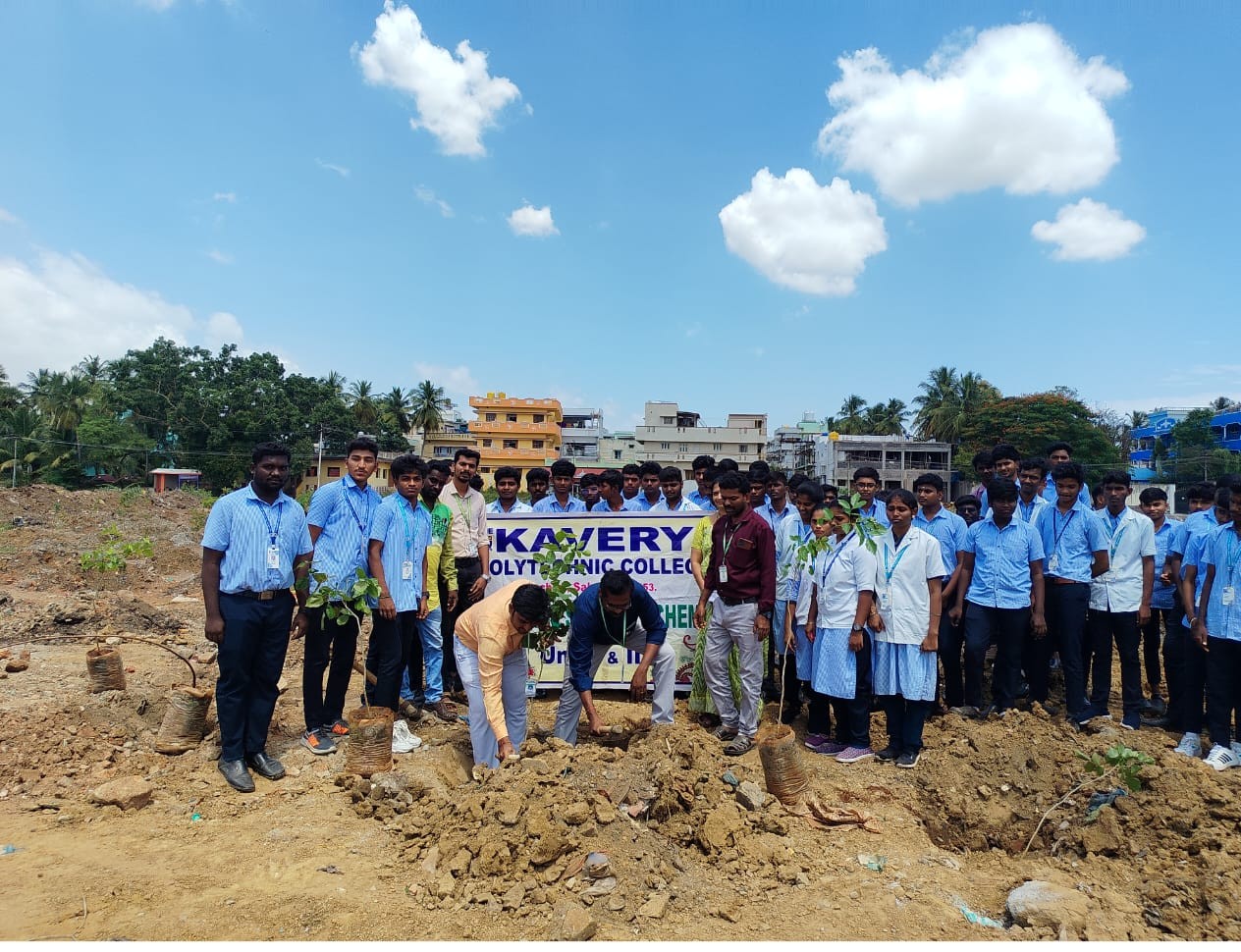
75 NSS volunteers from The Kavery Polytechnic College actively participated in a tree plantation program at Mecheri. With great enthusiasm and teamwork, our students successfully planted 300 saplings, contributing towards a greener and healthier environment on 20.08.2025.
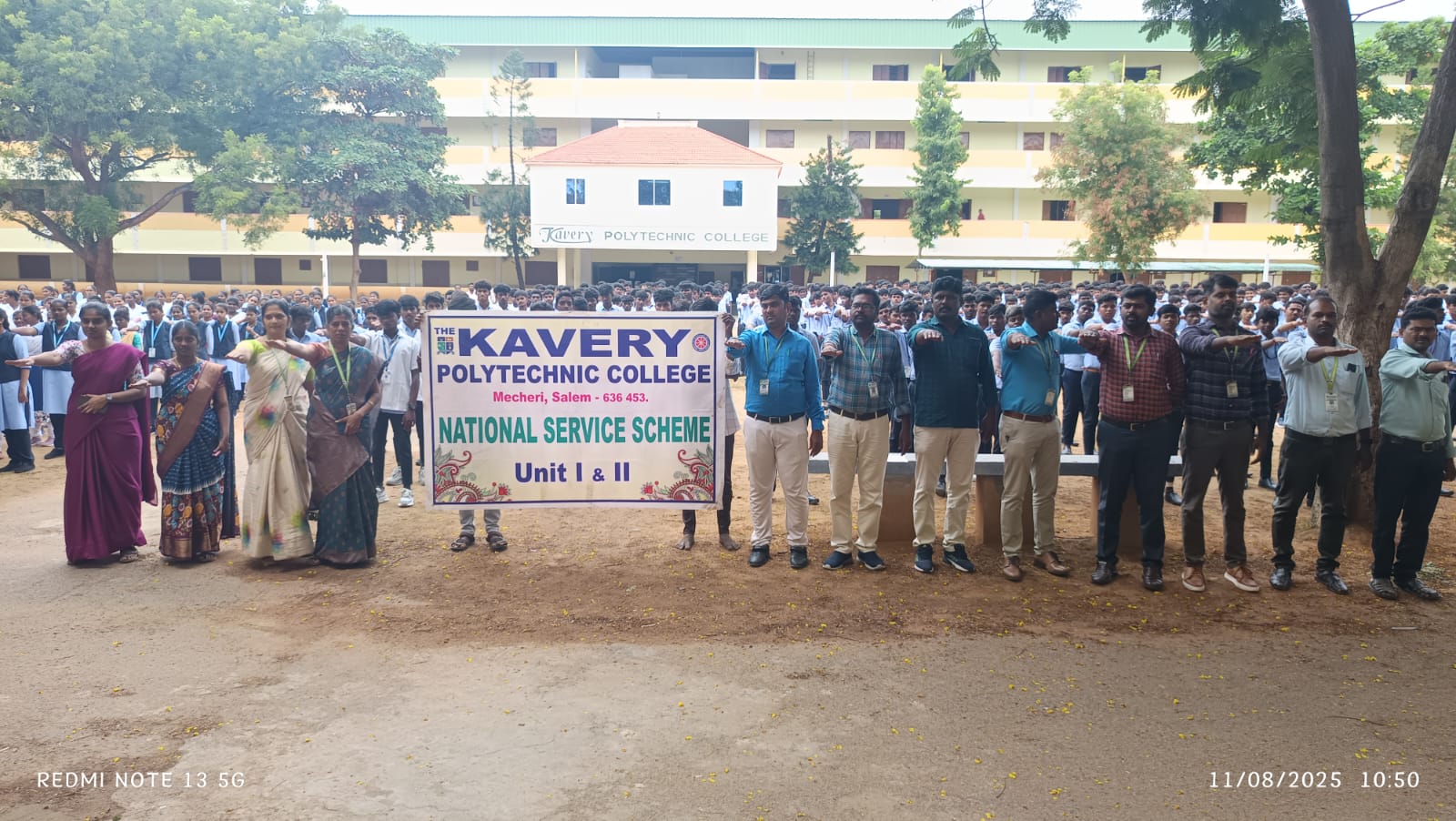
We are happy to inform that 11.08.2025, we successfully executed the Anti Drug Club in our The Kavery Polytechnic College, Mecheri.
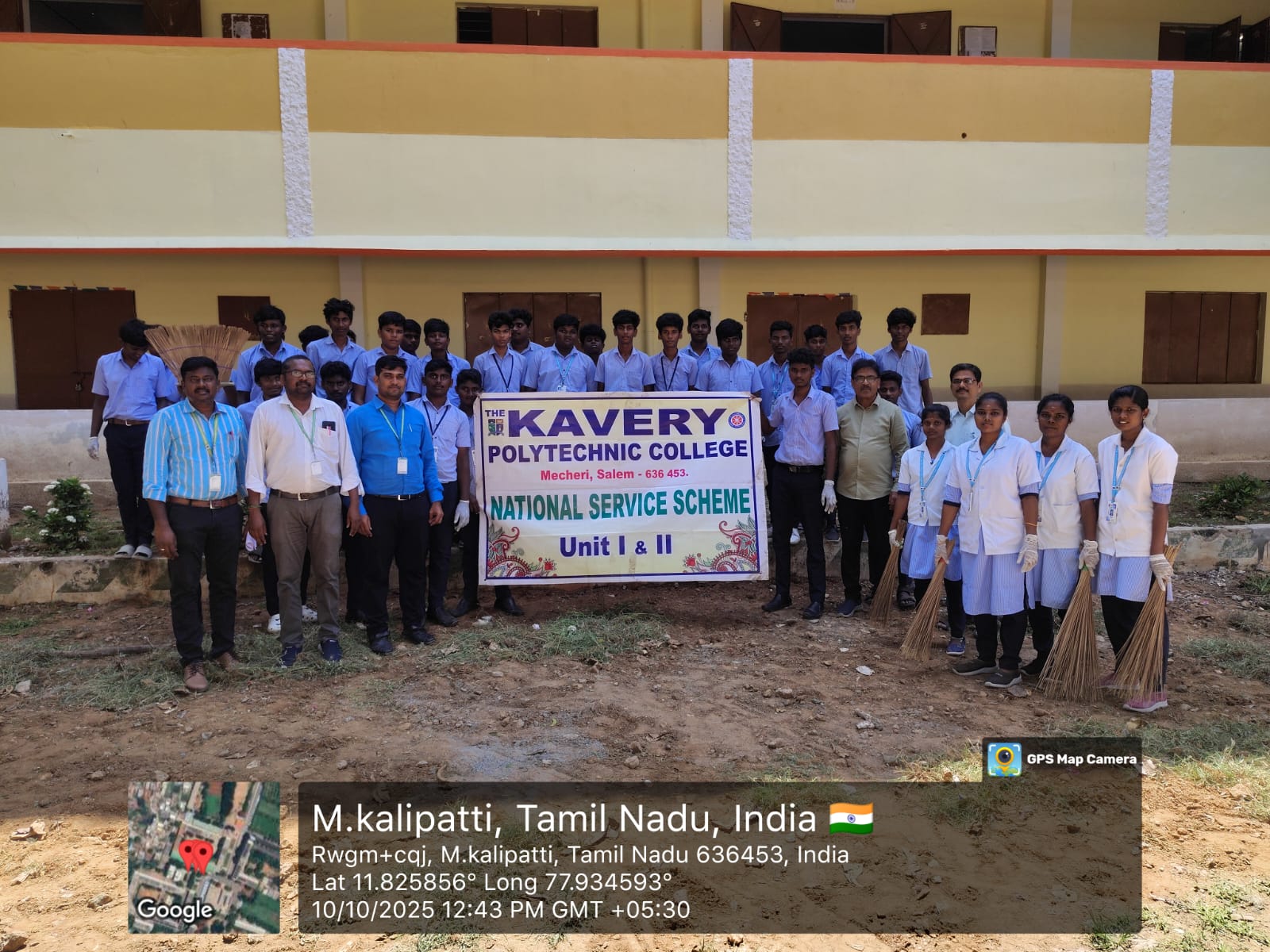
Campus cleaning programme on 10.10.2025.
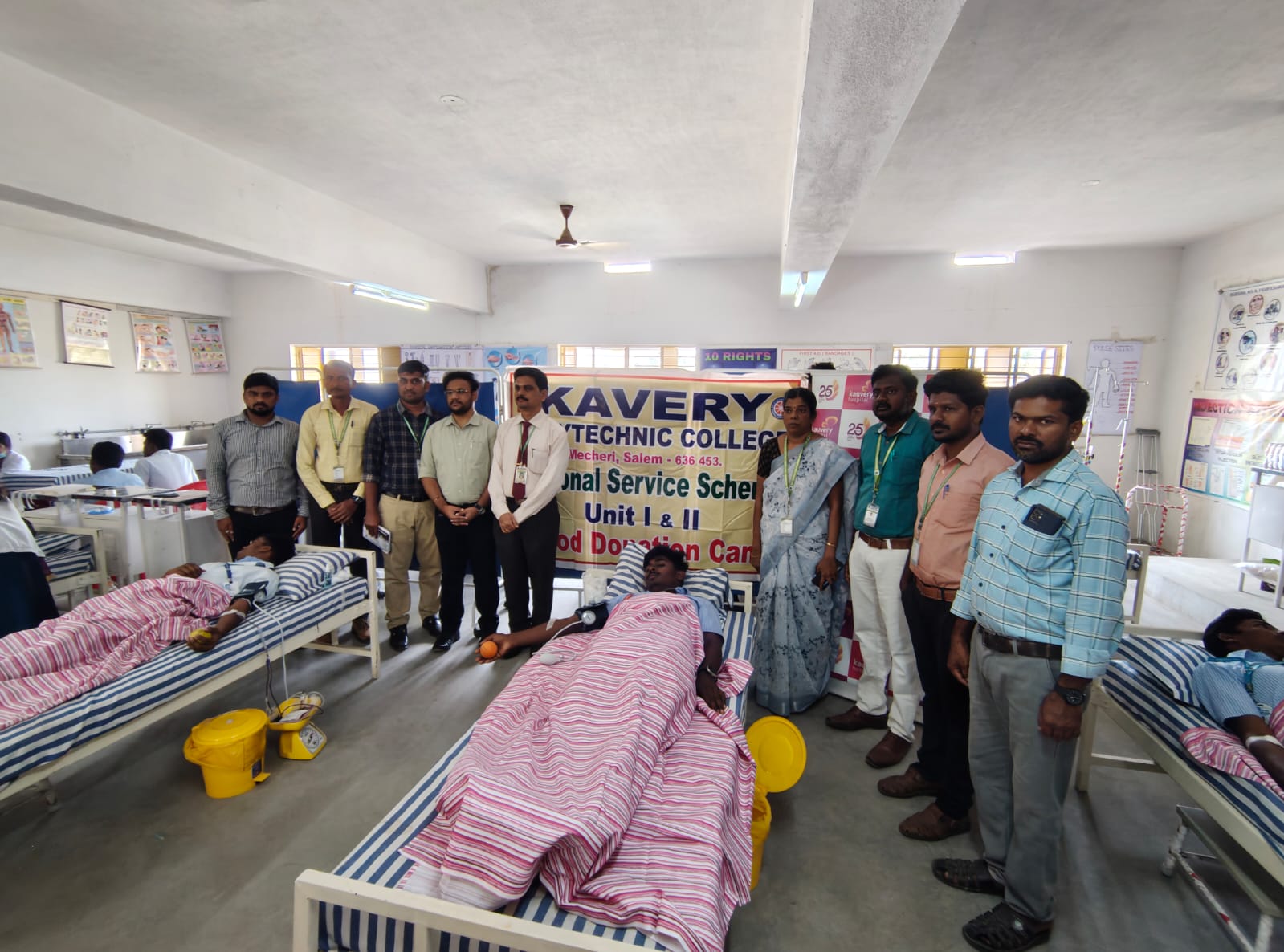
Blood donation camp on 30.01.2025.
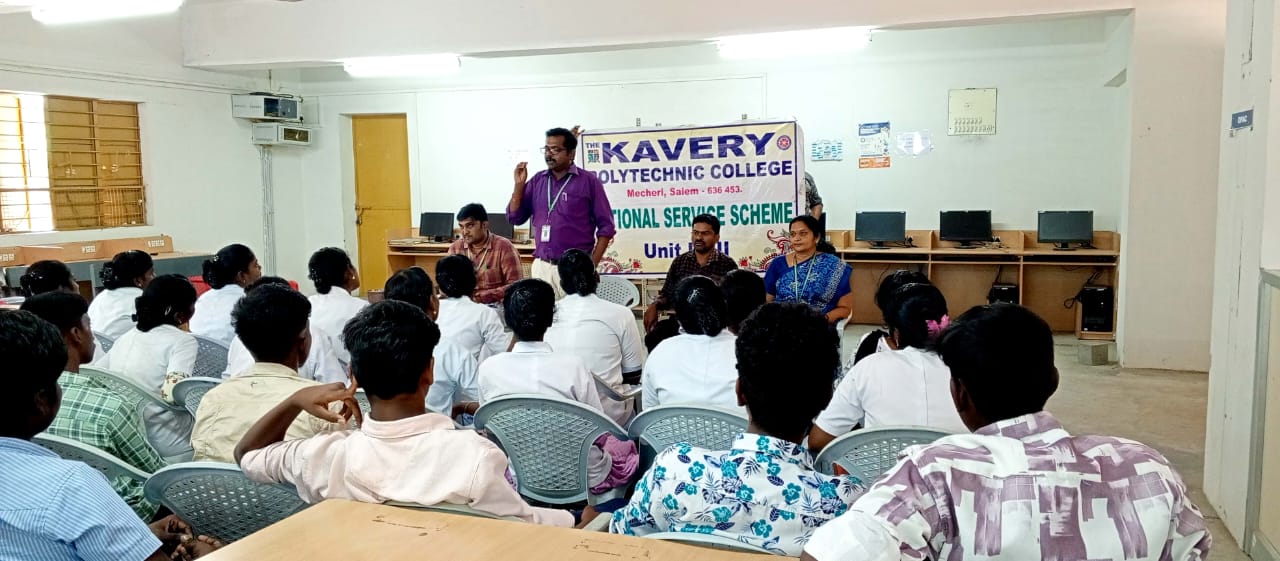
12.08.2025 we engaged with NSS induction programme that discussed fundamental and benefits of NSS scheme have been explored to the students.
Syllabus
Download the complete syllabus for the Department of Mechanical Engineering - R2023.