
Overview
The Department of Electrical and Electronics Engineering (EEE) provides quality education in core electrical, electronics, and emerging areas like renewable energy, smart grids, and automation. With experienced faculty, modern laboratories, and industry-focused training, the department prepares students for successful careers in core industries, IT, and higher studies. The department emphasizes practical learning, innovation, and skill development to meet current industry demands.
Scope: The Diploma in Electrical and Electronics Engineering (EEE) department plays an important role in technical education, focusing on both theoretical knowledge and practical skills in electrical and electronic systems. Work environments can vary depending on specialization (power systems, electronics, maintenance, etc.). Technological advancements have significantly transformed industries, improving efficiency, automation, and sustainability. Diploma students in EEE gain knowledge of these modern technologies to meet industry demands.
Salary and Growth: A Diploma in EEE is a practical, job-oriented course with decent starting pay and good long-term growth. Freshers typically earn between ₹10,000 – ₹25,000/month (₹1.8 – ₹3.5 LPA average starting package). Some freshers earn around ₹21,000/month on average. The future outlook is moderately good, depending on skills, specialization, and further qualification upgrades.
Vision
To produce technically strong diploma holders who can design, install, and maintain electrical and electronic systems. This ensures students are job-ready for industries like power generation, automation, and manufacturing. To create diploma holders who focus on energy efficiency, renewable energy, and safe electrical practices. This supports sustainable development and benefits society by reducing environmental impact.
Mission
- Provide Strong Technical Knowledge: Equip students with fundamental and practical knowledge in electrical circuits, electronics, machines, and power systems. This helps them understand core concepts and apply them in real-world situations.
- Develop Practical and Problem-Solving Skills: Train students through lab work, projects, and hands-on experience so they can troubleshoot, repair, and maintain electrical and electronic systems effectively in industry.
- Promote Professional Ethics and Continuous Learning: Encourage students to follow ethical practices, work responsibly, and keep updating their knowledge with new technologies to stay relevant in the evolving engineering field.
Program Outcomes (POs)
- PO1: Basic and Discipline-specific knowledge: Apply knowledge of basic mathematics, science and engineering fundamentals and an engineering specialization to solve engineering problems.
- PO2: Problem analysis: Identify and analyze well-defined engineering problems using codified standard methods.
- PO3: Design/ development of solutions: Design solutions for well-defined technical problems and assist with the design of systems components or processes to meet specified needs.
- PO4: Engineering Tools, Experimentation, and Testing: Apply modern engineering tools and appropriate techniques to conduct standard tests and measurements.
- PO5: Engineering practices for society, sustainability and environment: Apply appropriate technology in the context of society, sustainability, environment and ethical practices.
- PO6: Project Management: Use engineering management principles individually, as a team member or as a leader to manage projects and effectively communicate about well-defined engineering activities.
- PO7: Life-long learning: Ability to analyze individual needs and engage in updating in the Context of technological changes.
Faculty Profile
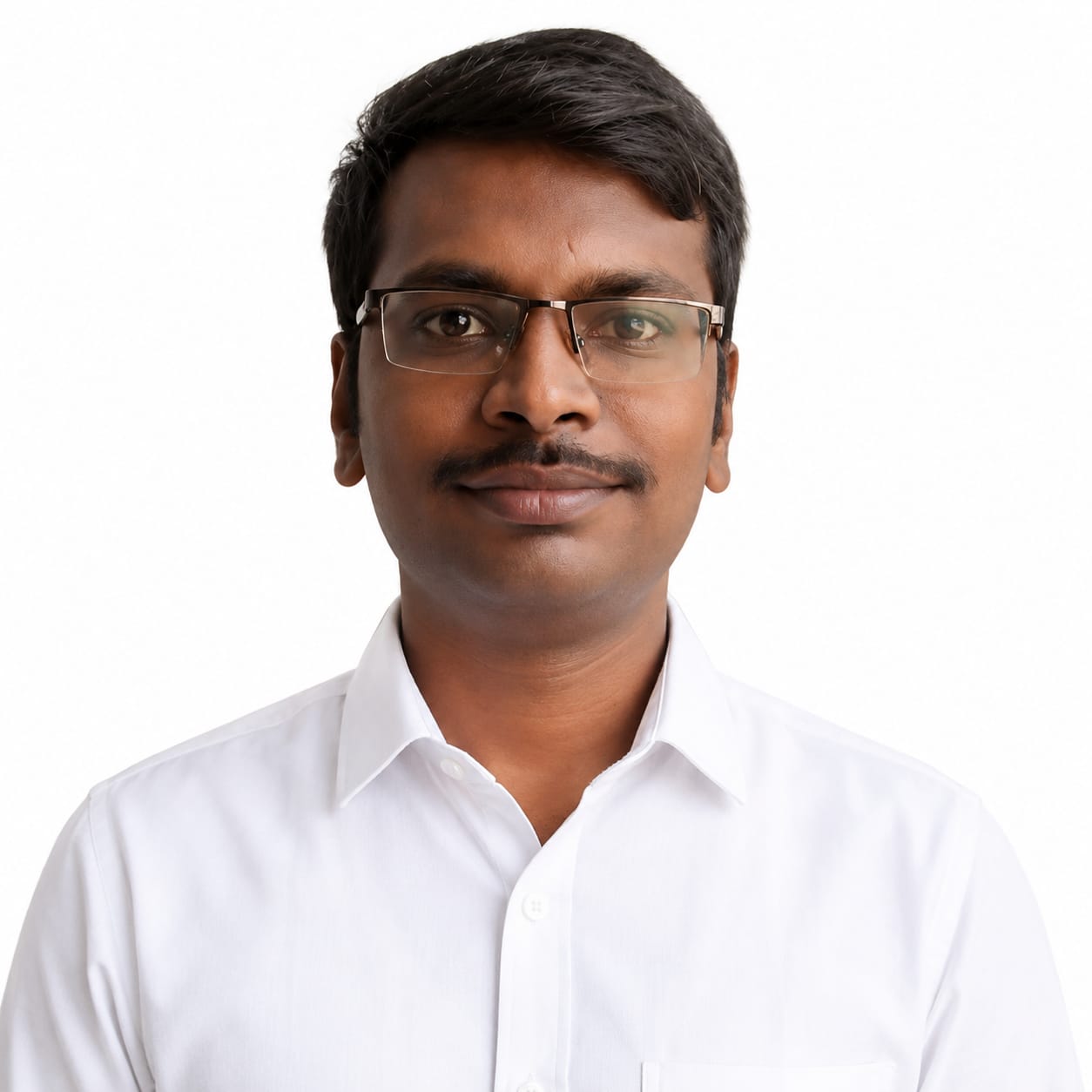
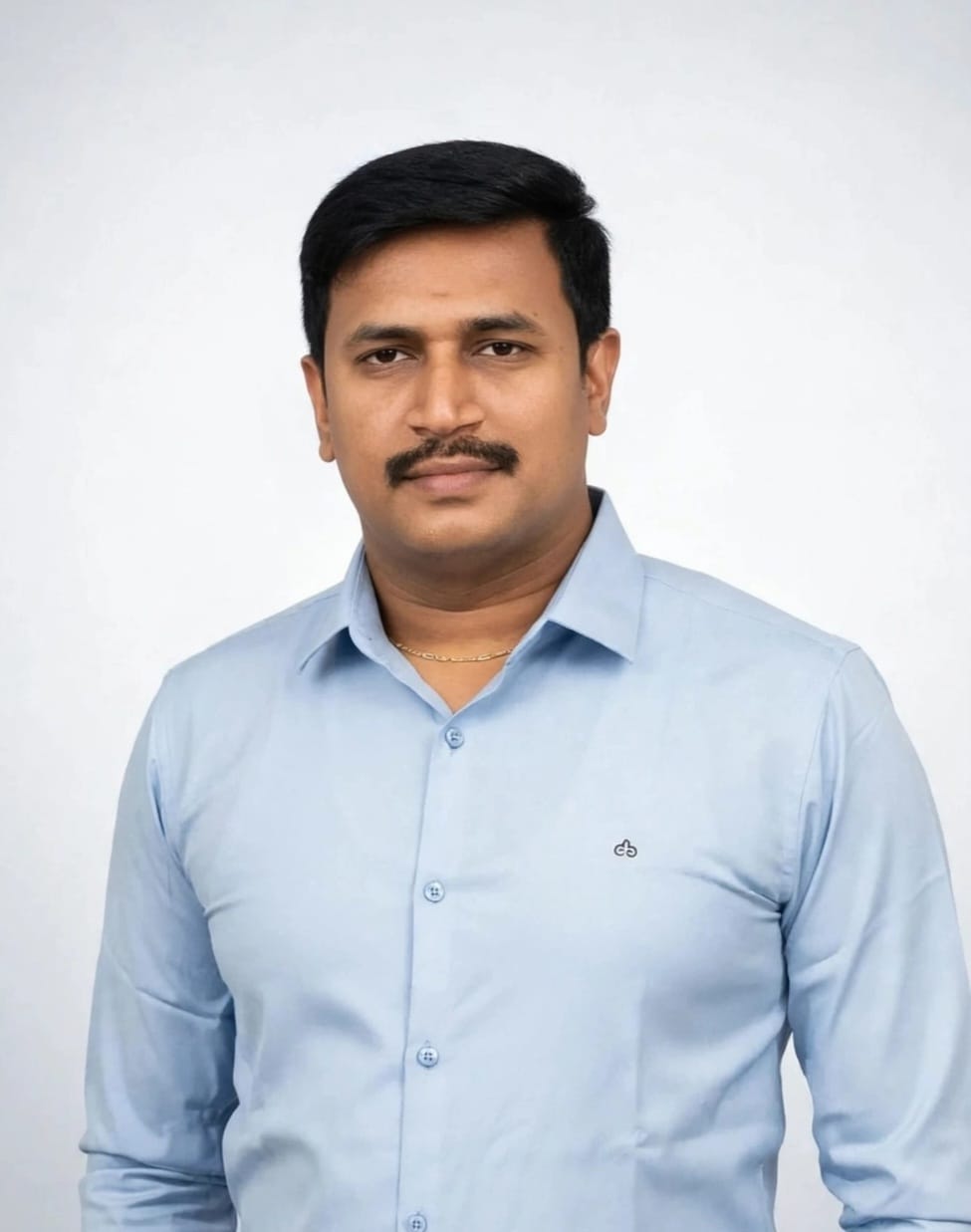
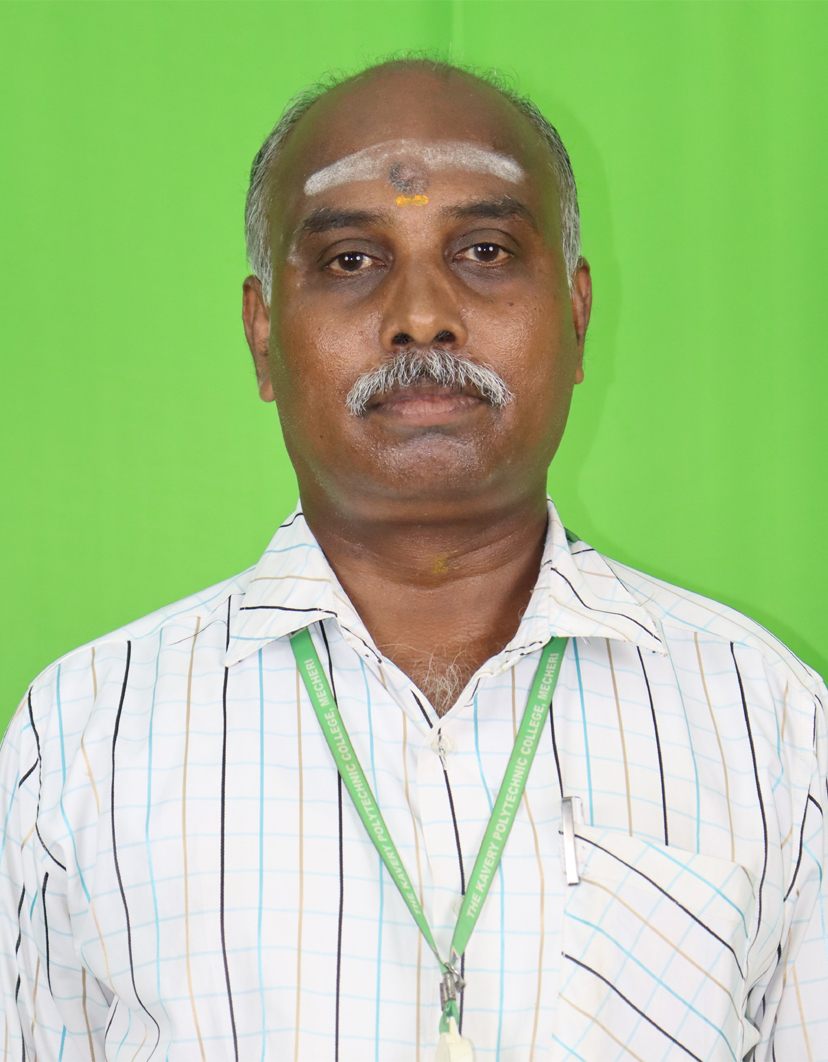
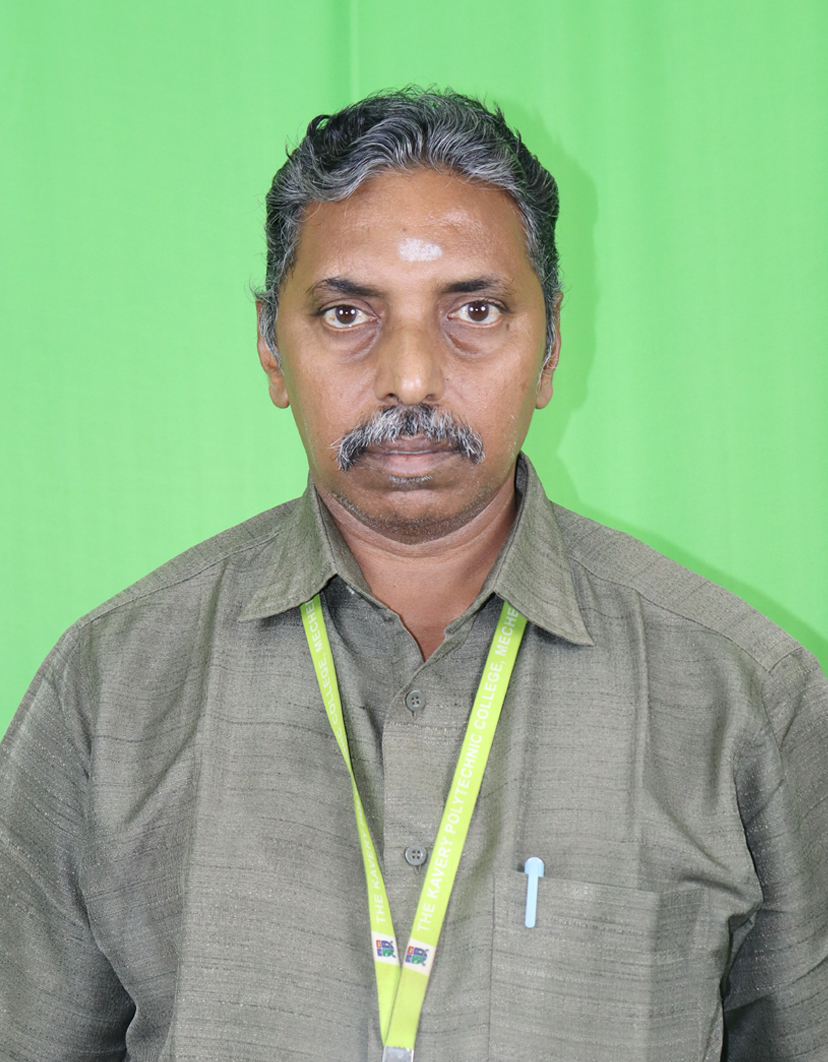
Technical Faculty Profile
Lab Facilities
The Electrical Laboratory is equipped with modern facilities to provide hands-on training on various AC and DC machines. The lab houses DC shunt, series, and compound motors and generators, single-phase and three-phase transformers, synchronous machines, and different types of induction motors including squirrel cage and slip ring types. Each test bench is provided with digital meters, wattmeters, tachometers, and loading arrangements such as lamp load, resistive load, and brake drum for conducting load tests and performance analysis. Safety features like MCBs, proper earthing, and insulated workstations are installed to ensure safe operation. The lab supports experiments on speed control, efficiency testing, regulation, parallel operation, and characteristics of machines as per curriculum requirements. These facilities help students bridge the gap between theoretical concepts and practical applications in electrical machines.
NAME OF LAB: ELECTRICAL LABORATORY
VENUE: GF-18
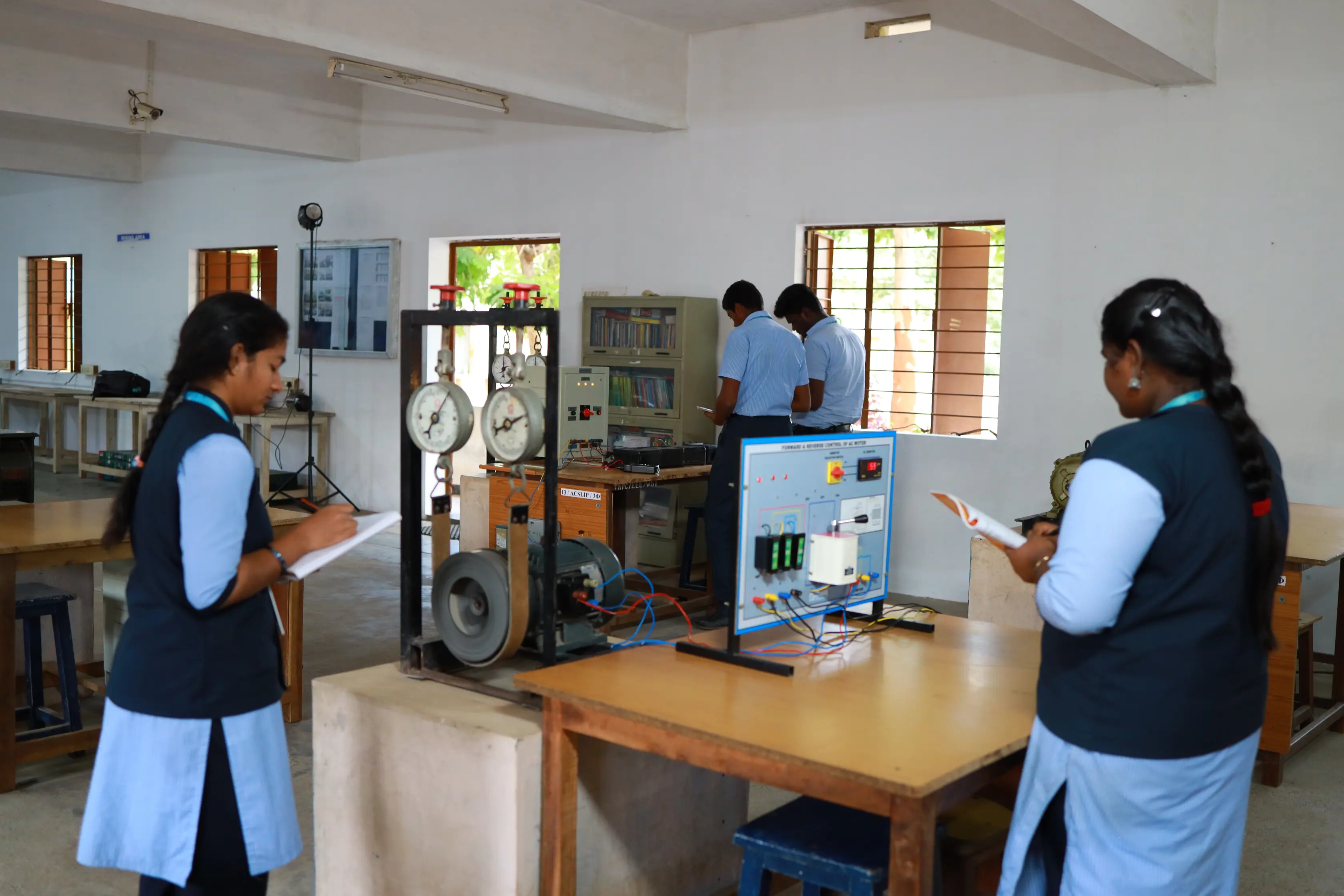
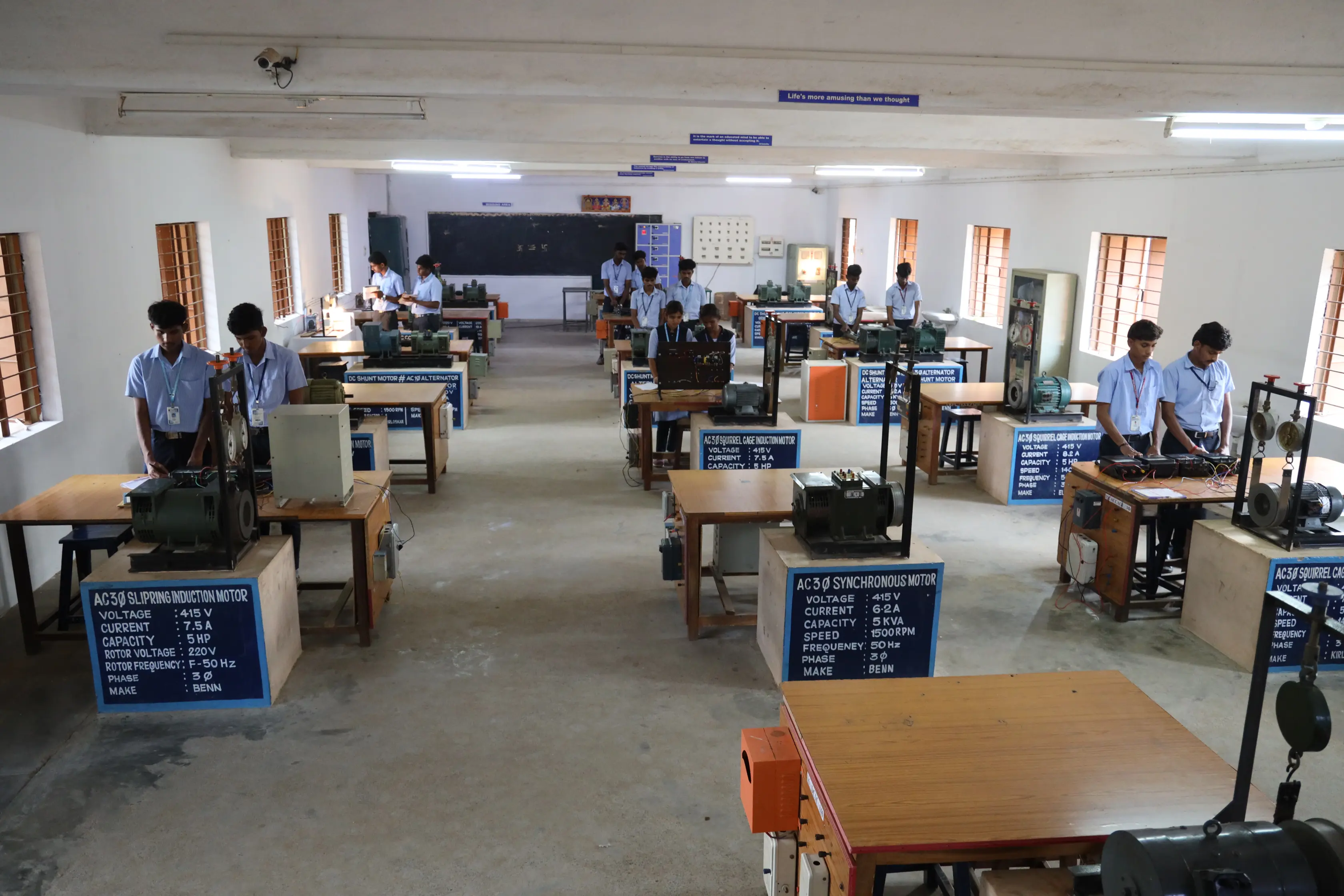
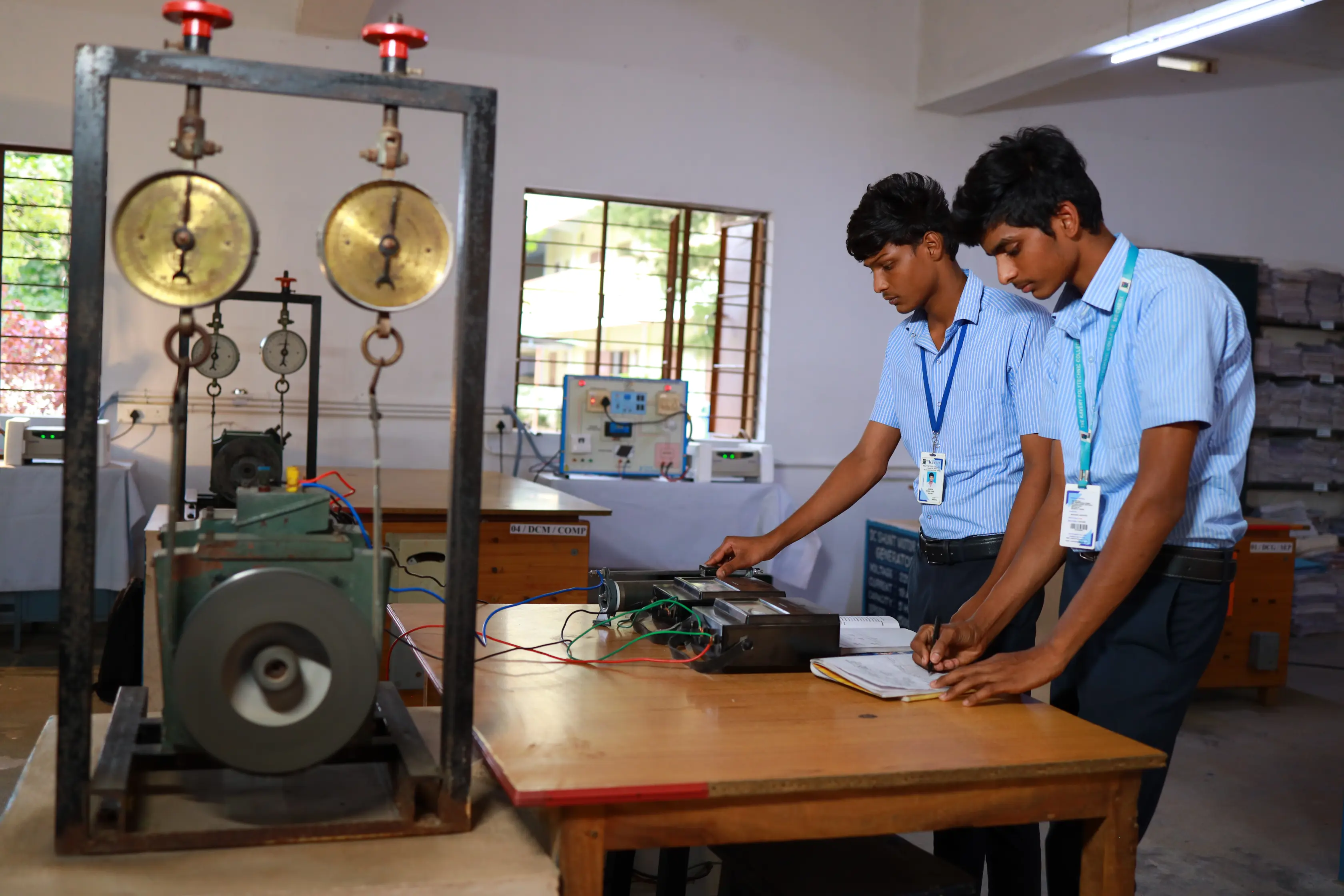
The Electronics Lab is well equipped with digital and analog instruments to support core electronics experiments. Facilities include CROs, DSOs, function generators, regulated power supplies, digital multimeters, and trainer kits for diodes, transistors, op-amps, and digital ICs. The lab enables students to design, test, and troubleshoot basic to advanced electronic circuits, building strong practical skills.
NAME OF LAB: ELECTRONICS LABORATORY
VENUE: SF-221
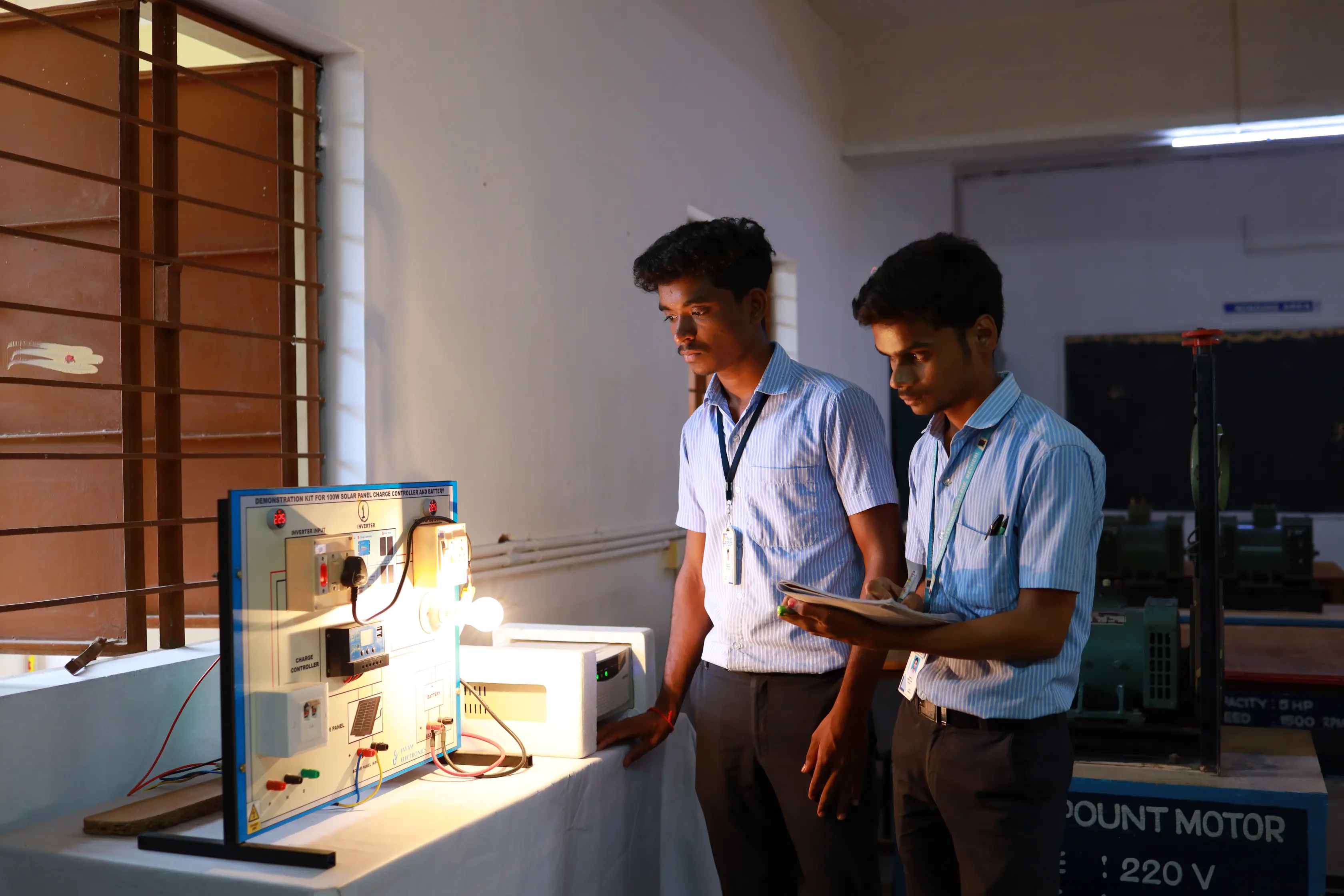
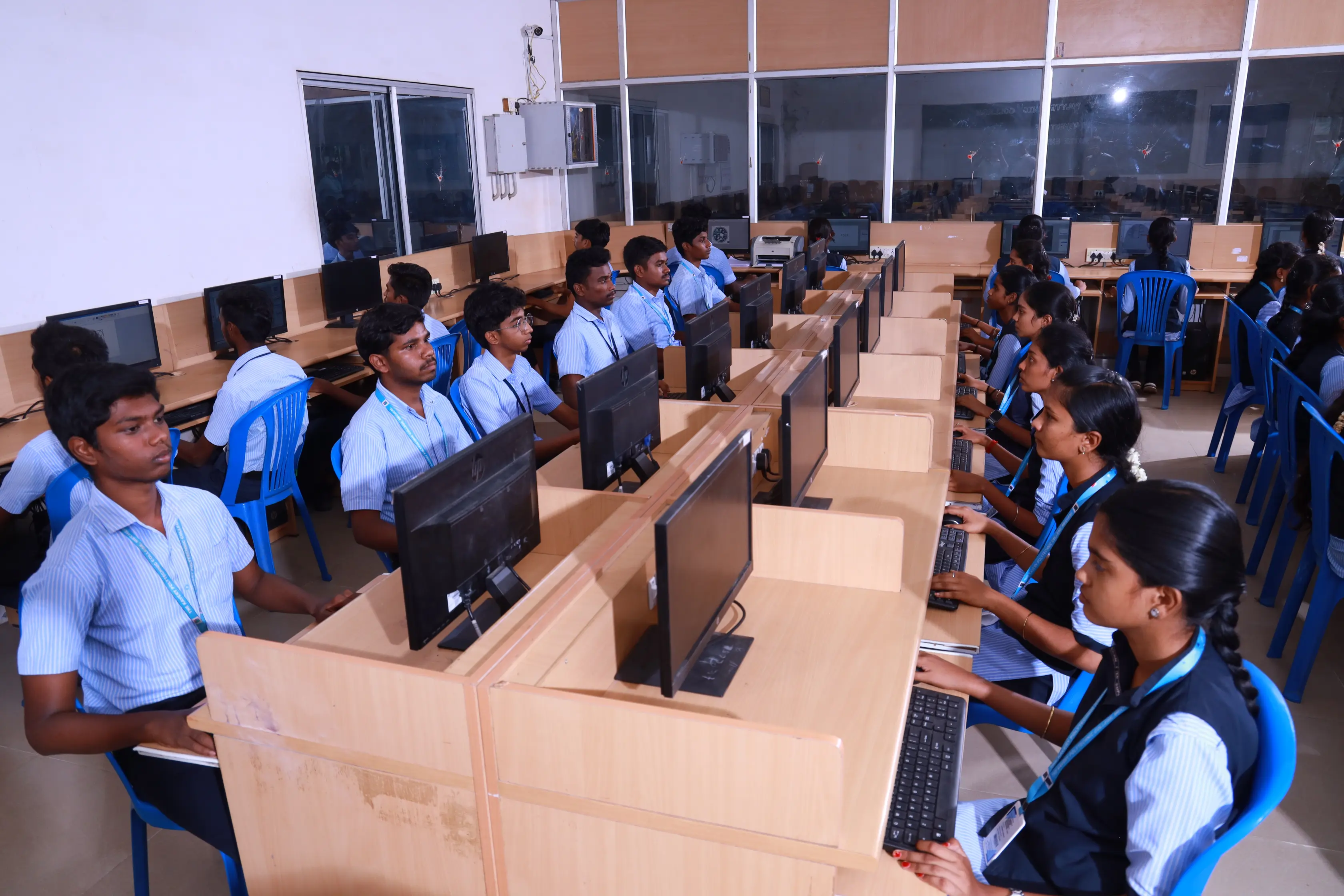
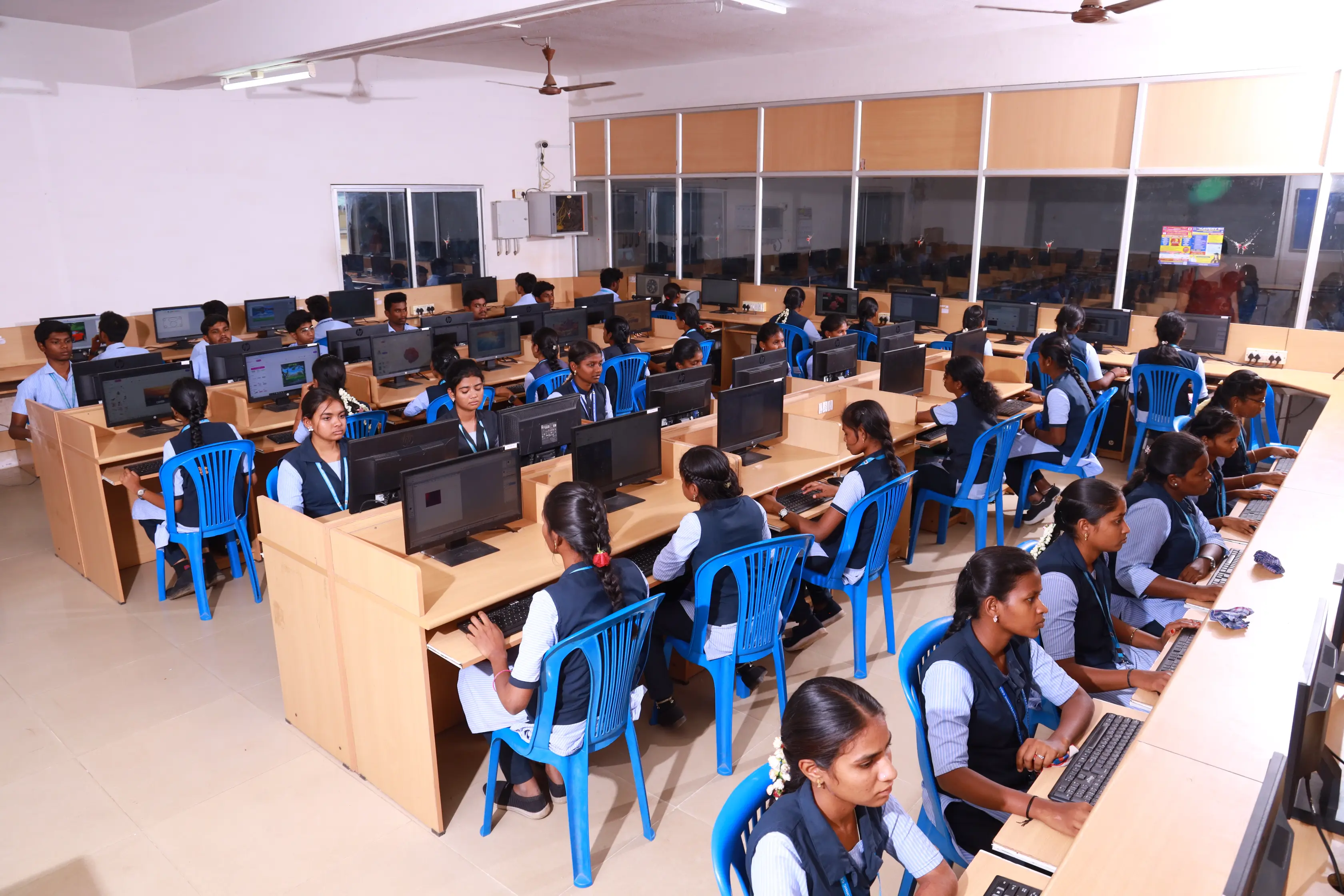
The Computer Lab is equipped with the latest systems and high-speed internet to support programming, simulation, and project work. Facilities include Core i3 desktops, licensed software like MATLAB, AutoCAD, Multisim, and Keil, along with printers, scanners, and LAN connectivity. The lab helps students develop coding, design, and analysis skills for academic and research activities.
NAME OF LAB: COMPUTER LABORATORY
VENUE: GF-13
Student Achievements
Academic Toppers: OCT-2024
| S.No | REG.NO | Student Name | Year / Sem | CGPA | Photo |
|---|---|---|---|---|---|
| 1 | 23392491 | NANTHINI R | III / V | 9.9 | 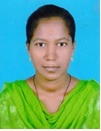 |
| 2 | 23392475 | GOKULAPRIYA S | III / V | 9.72 | 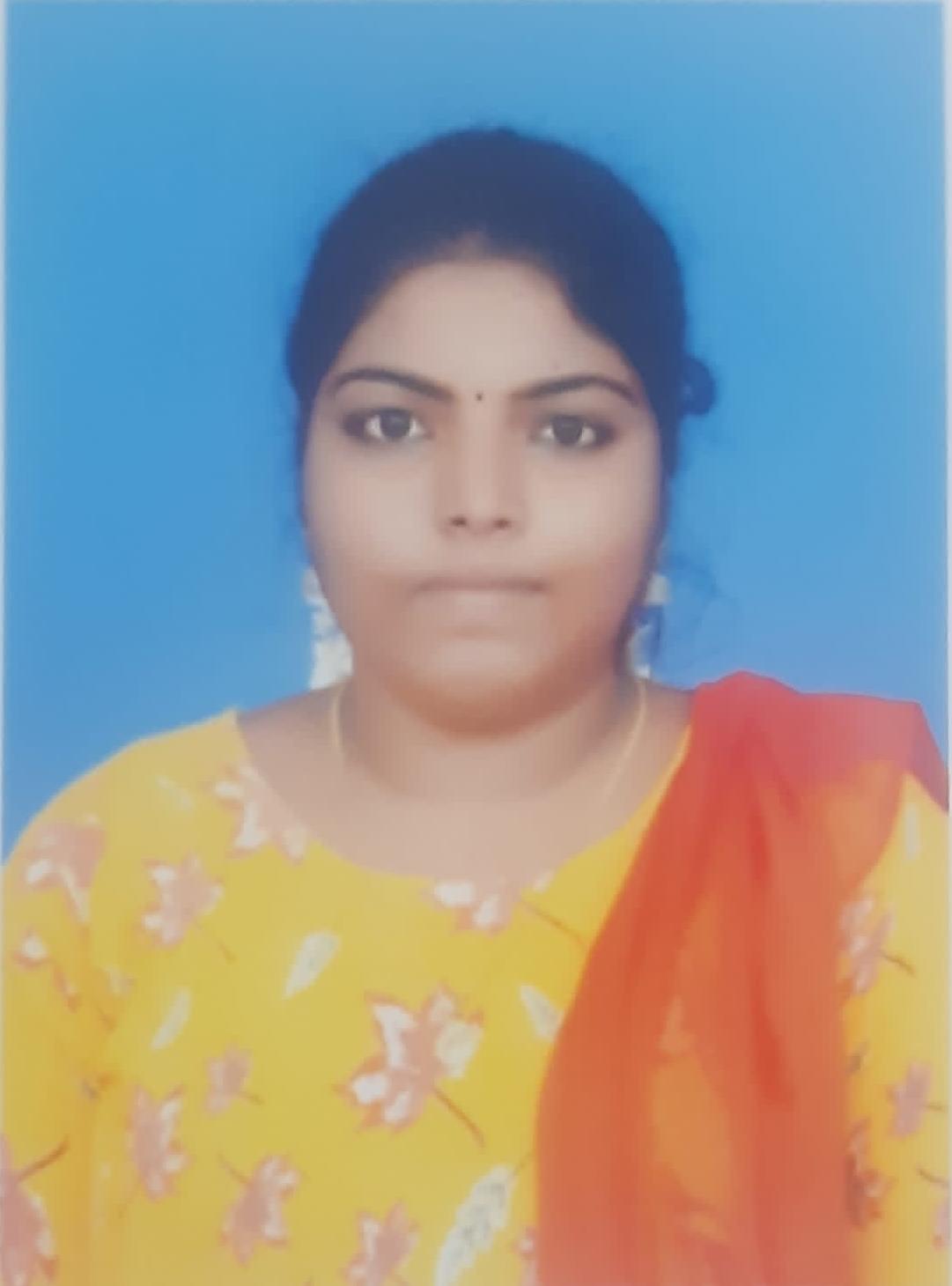 |
| 3 | 23392485 | KEERTHIKA S | III / V | 9.68 |  |
| 4 | 24306601 | SARVIKA R | II / III | 9.66 |  |
| 5 | 24306552 | BRUNDHA A | II / III | 9.33 |  |
| 6 | 24306561 | GOKUL N | II / III | 9.16 |  |
Academic Toppers: April 2025
| S.No | REG.NO | Student Name | Year / Sem | CGPA | Photo |
|---|---|---|---|---|---|
| 1 | 23392491 | NANTHINI R | III / VI | 9.8 | |
| 2 | 23392485 | KEERTHIKA S | III / VI | 9.65 | |
| 3 | 23306998 | SANJAY S | III / VI | 9.4 |  |
| 4 | 24306552 | BRUNDHA A | II / IV | 9.66 | |
| 5 | 24306583 | PARTHASARATHI S | II / IV | 9.66 |  |
| 6 | 24392225 | SOUNDARARAJAN P | II / IV | 9.66 | 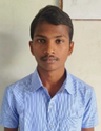 |
Academic Toppers: OCT-2025
| S.No | REG.NO | Student Name | Year / Sem | CGPA | Photo |
|---|---|---|---|---|---|
| 1 | 24392225 | SOUNDARARAJAN P | III / V | 9.75 |  |
| 2 | 24306578 | NANDHAKUMAR V | III / V | 9.62 | 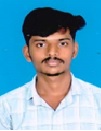 |
| 3 | 24392214 | MANI V | III / V | 9.62 | 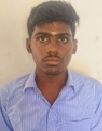 |
| 4 | 24392222 | SANTHOSH P | III / V | 9.62 |  |
| 5 | 25306068 | MOHANKUMARAN U | II / III | 9.5 | 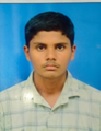 |
| 6 | 25383678 | ARIVALAGAN R | II / III | 9.5 | 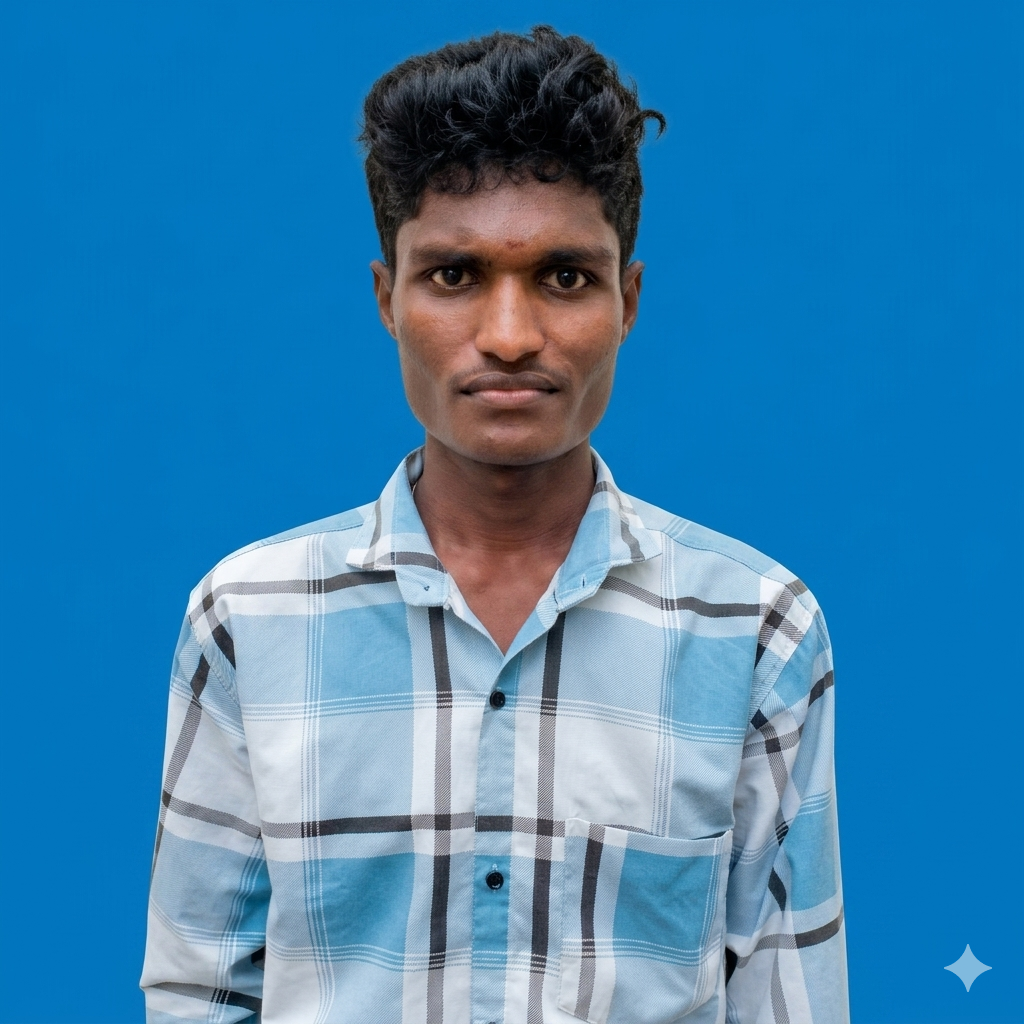 |
| 7 | 25383700 | SANTHIYA R V | II / III | 9.5 | 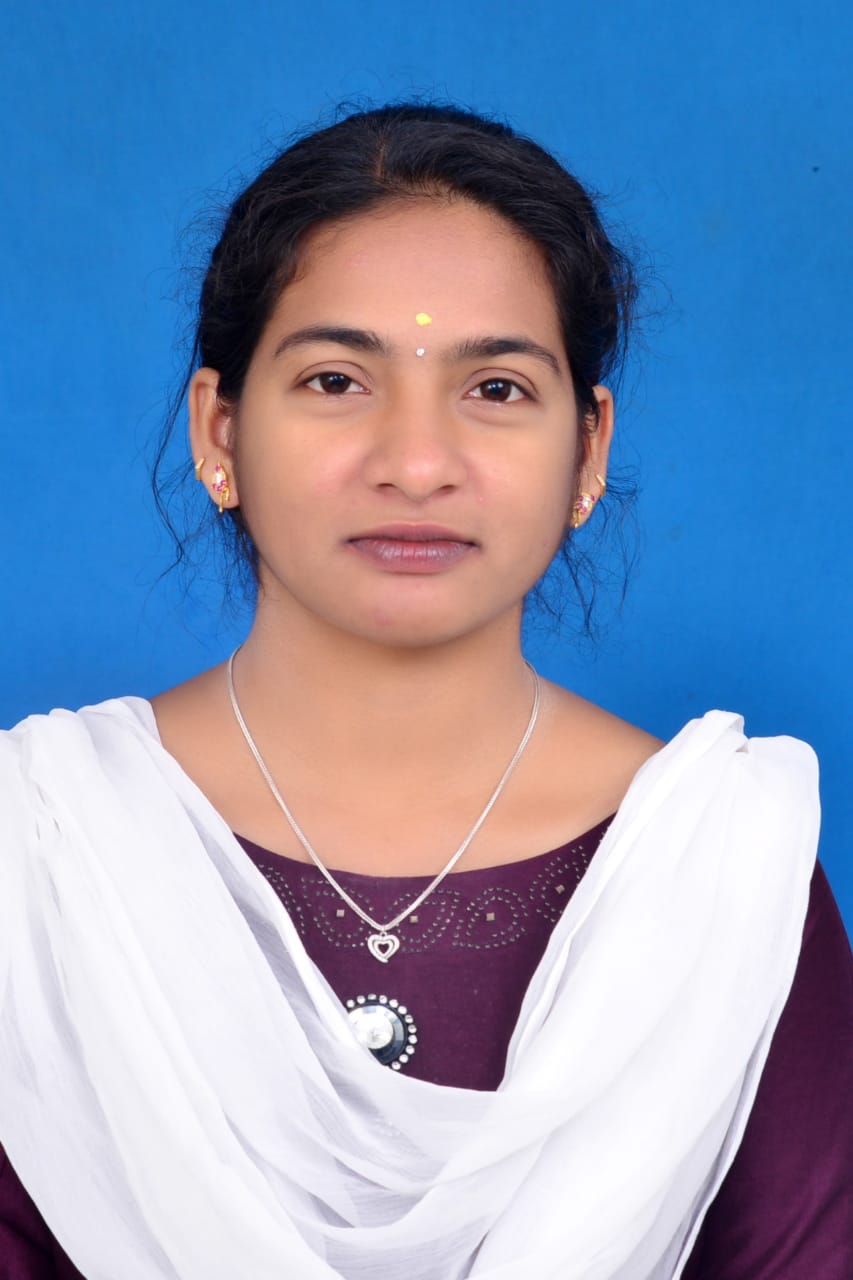 |
Job Opportunities
Diploma in Electrical and Electronics Engineering graduates have excellent career prospects in both government and private sectors. Here are some of the top employers:
- TAMILNADU ELECTRICITY BOARD
- INDIAN RAILWAY
- BHEL – Bharat Heavy Electricals Limited
- NTPC – National Thermal Power Corporation
- PGCIL – Power Grid Corporation of India Limited
- NHPC – National Hydroelectric Power Corporation
- NLC – NLC India Limited (Neyveli Lignite Corporation)
- ISRO – Indian Space Research Organisation
- TRANSFORMER ERECTION
- SOLAR PANEL ERECTION
- E-VEHICLE
- PCB DESIGNING
- R&D
- MOBILE MANUFACTURING
Industrial Visits
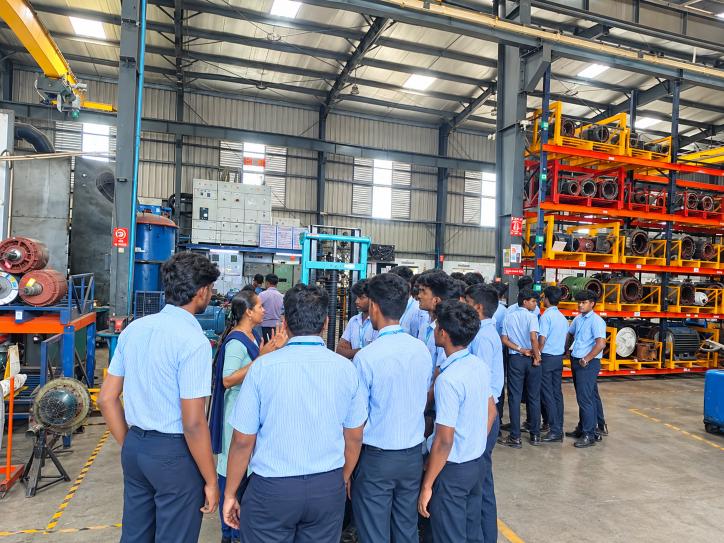
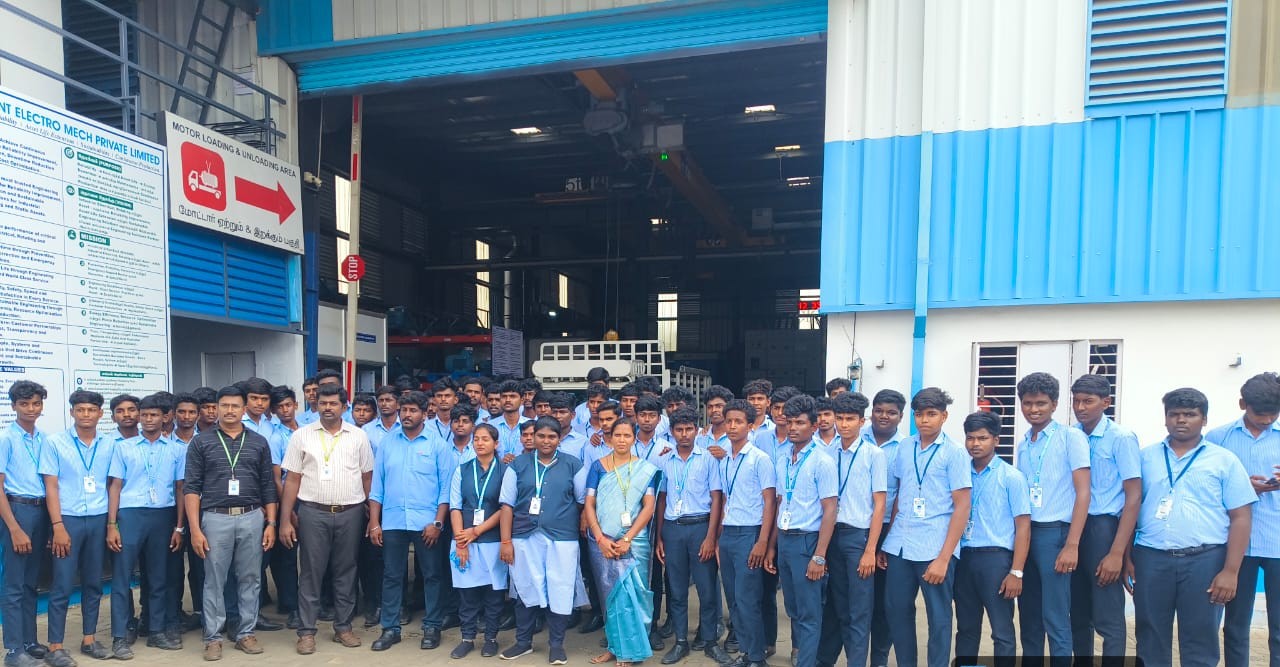
DATE: 25.09.2026 | TIME: 09.30 AM | PLACE: Current Electro Mech Private Limited, Erode.
An Industrial Visit to Current Electro Mech Private Limited, Erode was organized for the students of the Electrical and Electronics Engineering (EEE) Department to provide them with valuable industrial exposure and practical learning opportunities.
During the visit, the students gained practical insights into the repair and servicing of AC motors, DC motors, windmill generators, alternators, transformers, water pumps, HT motors, and servo motors. The company staff provided detailed explanations of the various repair and servicing activities, enabling the students to understand the practical aspects of electrical machines.
The visit provided the students with valuable hands-on industrial knowledge, technical exposure, and an understanding of workplace practices. It served as an informative and enriching learning experience, bridging the gap between theoretical knowledge and practical application.
The Industrial Visit was highly beneficial to the students and contributed significantly to enhancing their technical knowledge, industrial awareness, and professional learning.
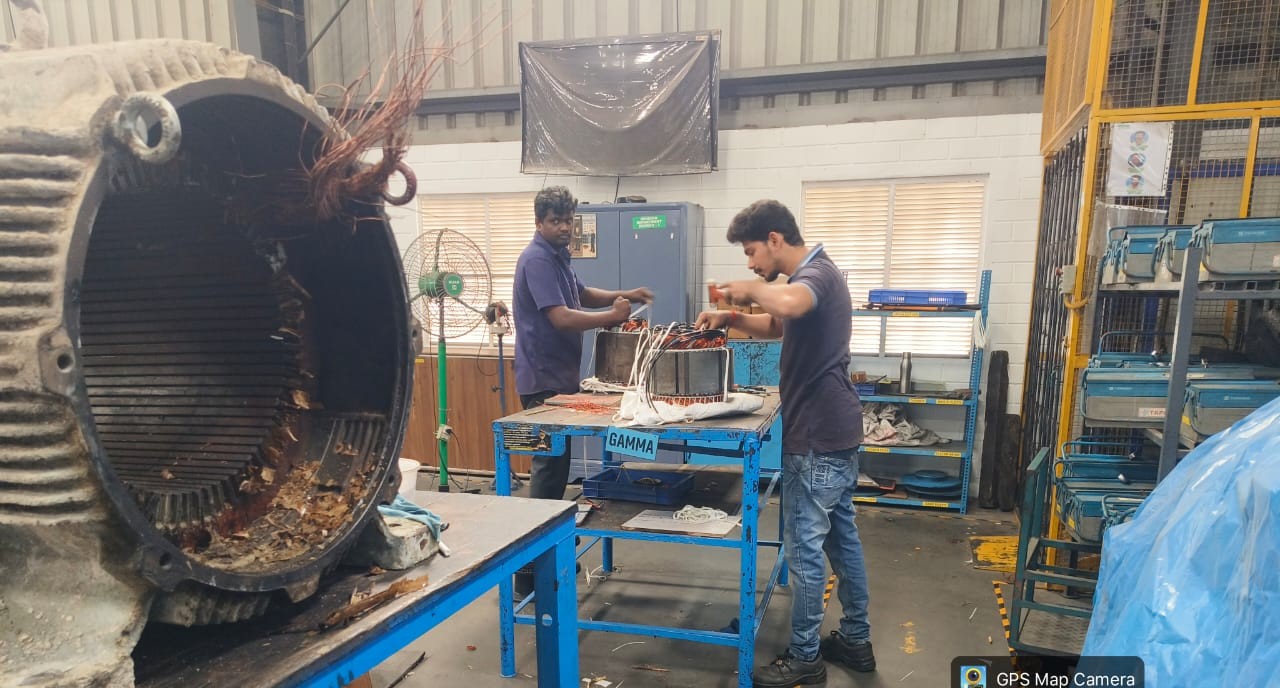
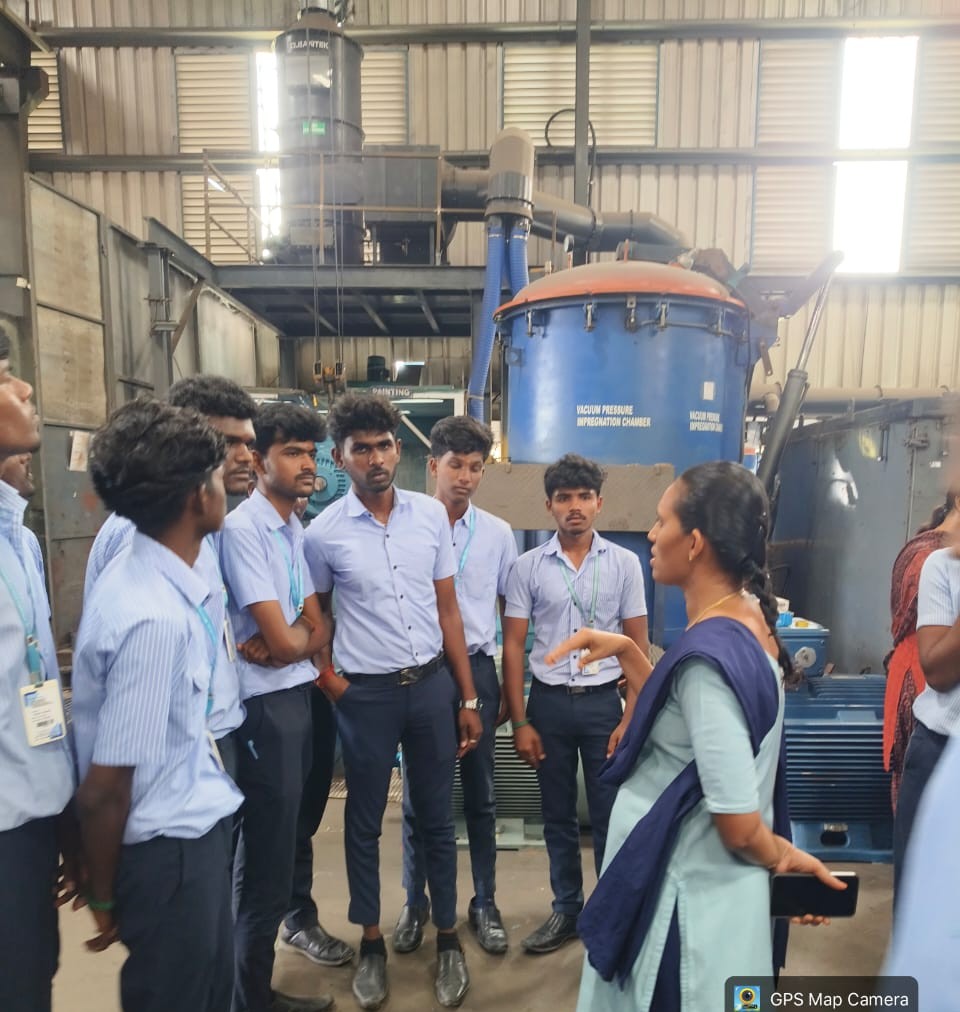
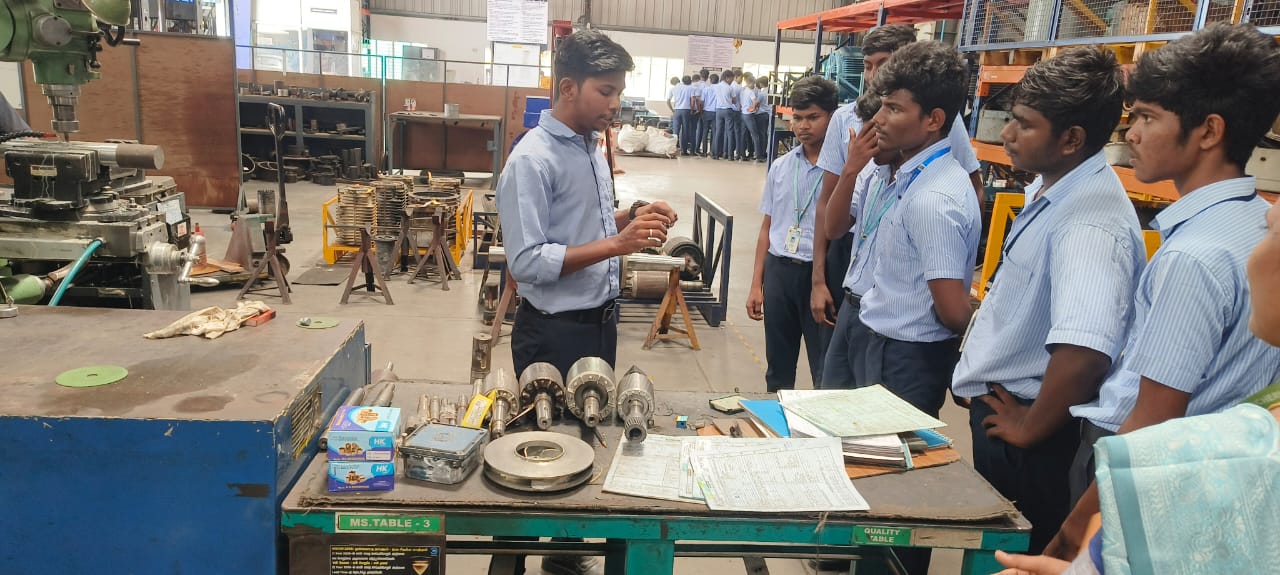
Our Department organized a one-day industrial visit for third-year students to "Sri Ranga Tech" in Salem, with the aim of providing practical exposure to panel manufacturing and starter operations. During the visit, the students observed the manufacturing process of panel boards, laser cutting, and starter functioning, which helped them understand real-time industrial processes. The visit was highly informative and beneficial for enhancing their technical knowledge and awareness of industrial practices.
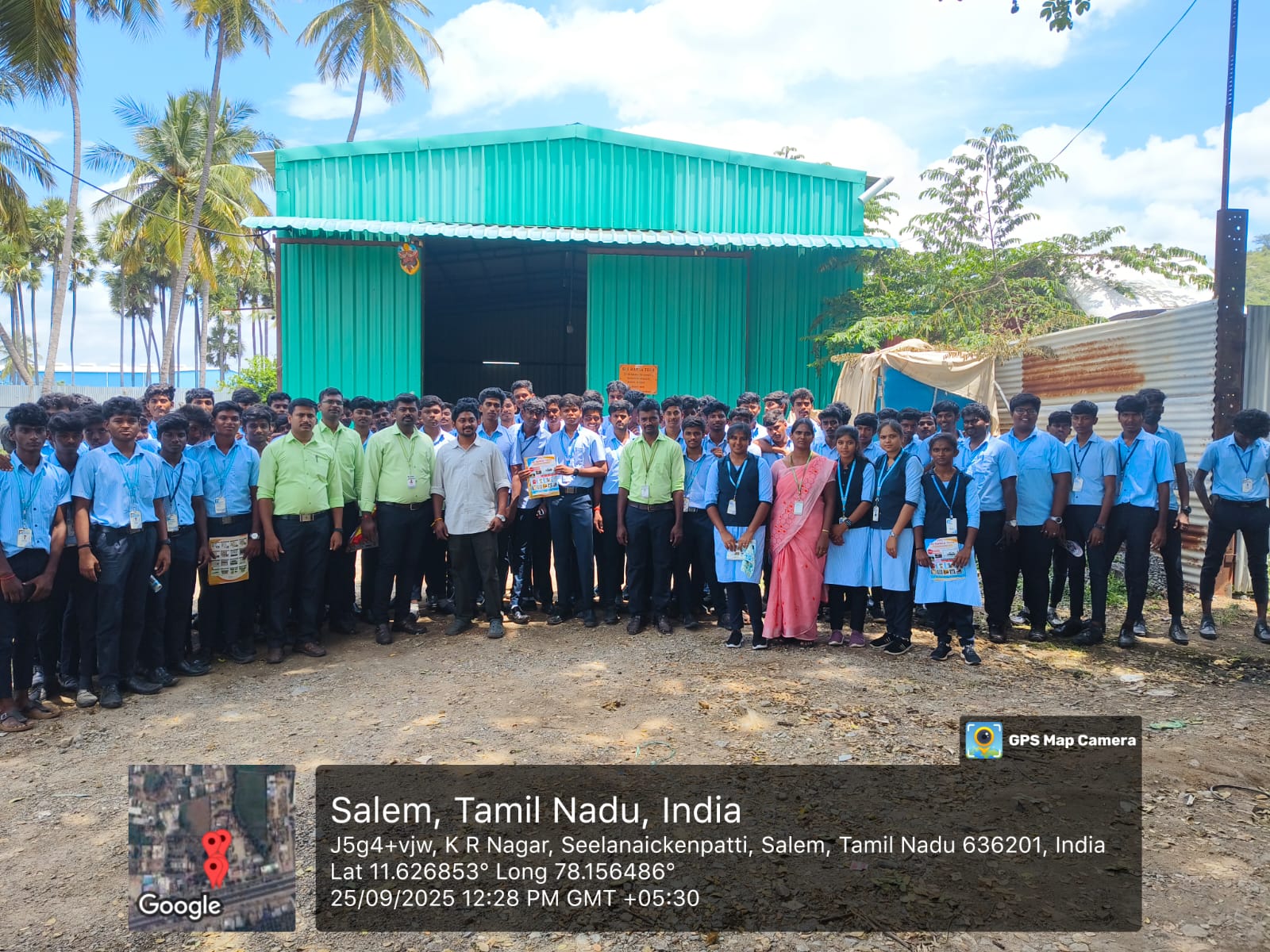
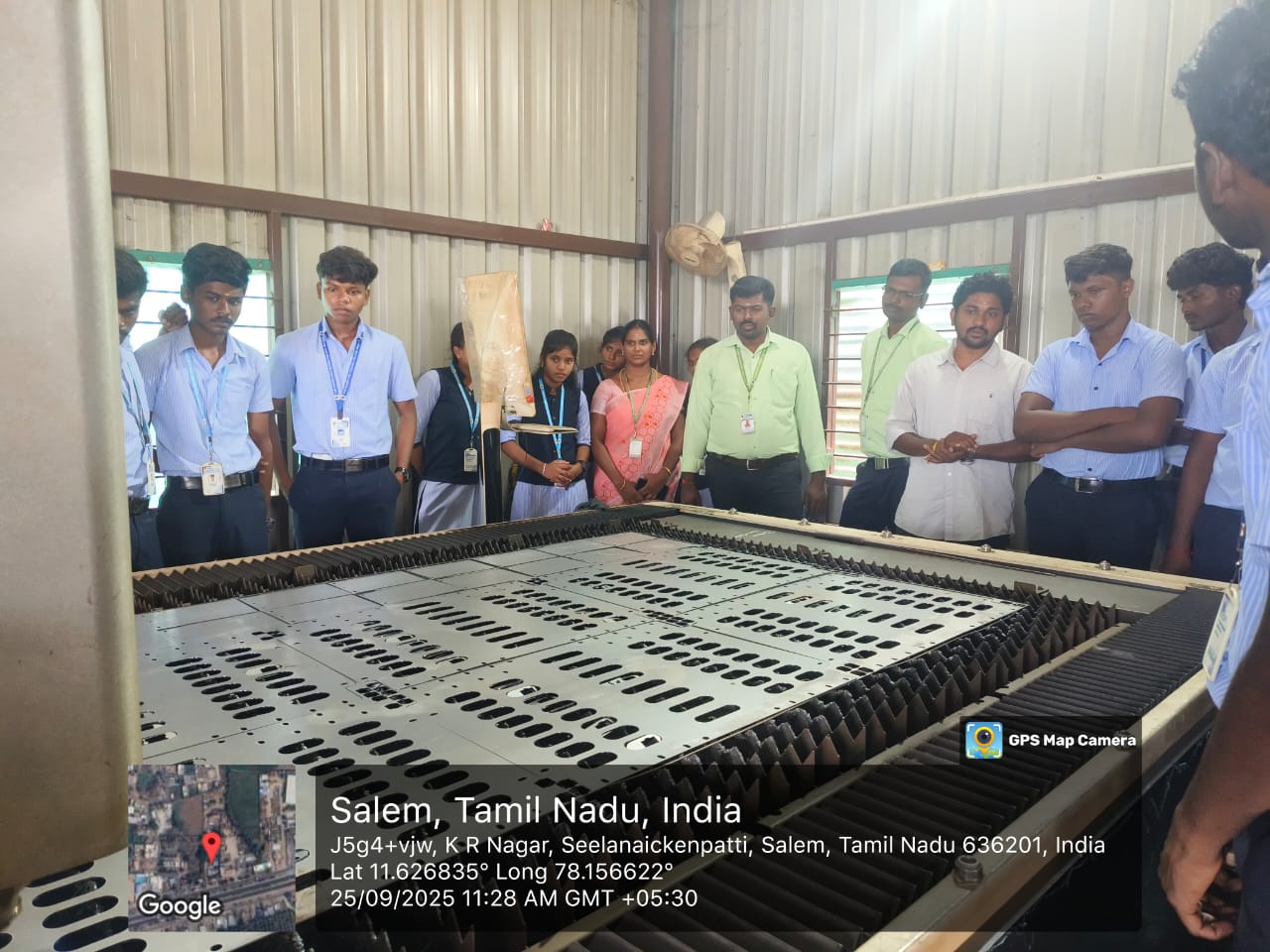
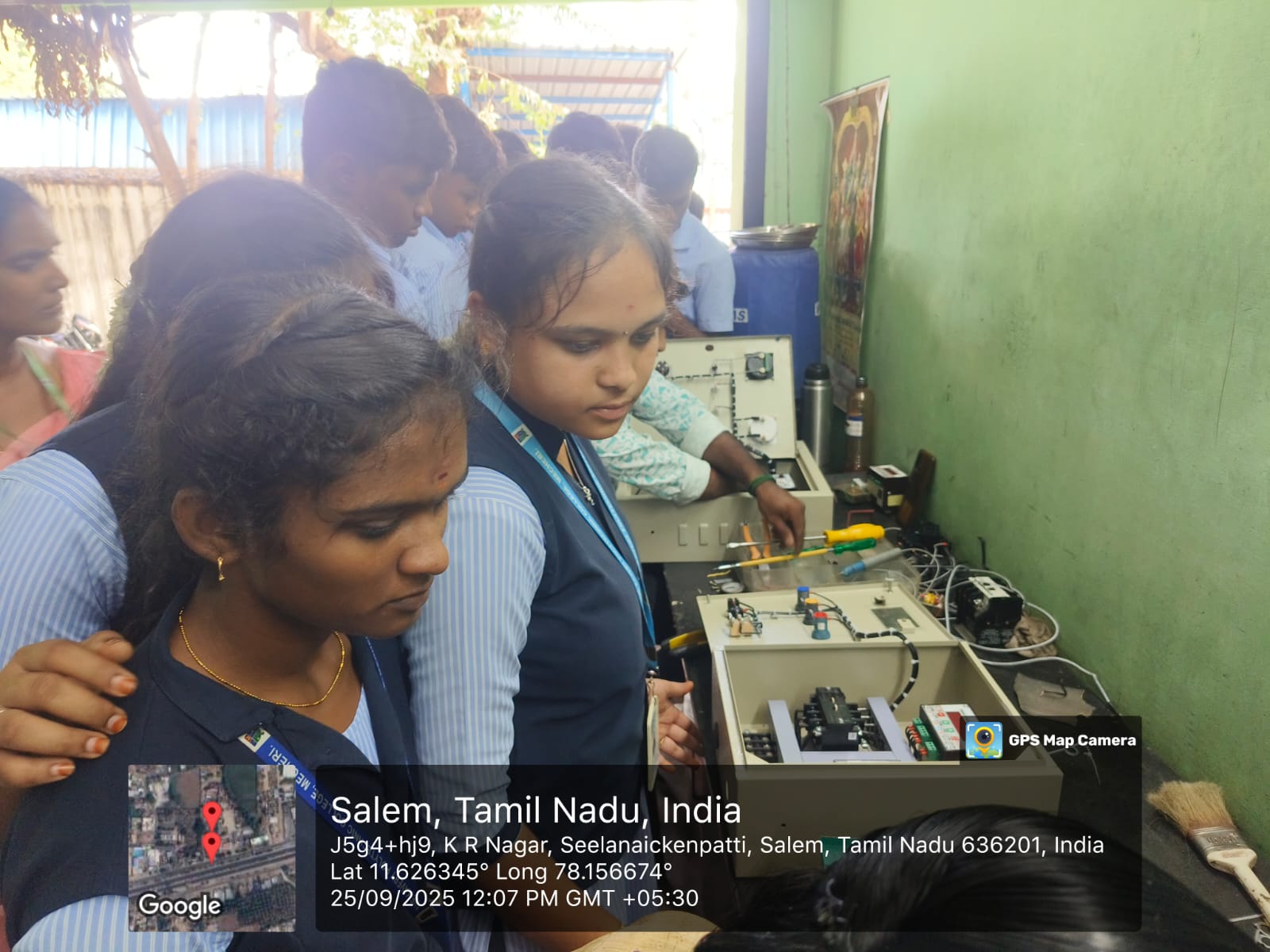
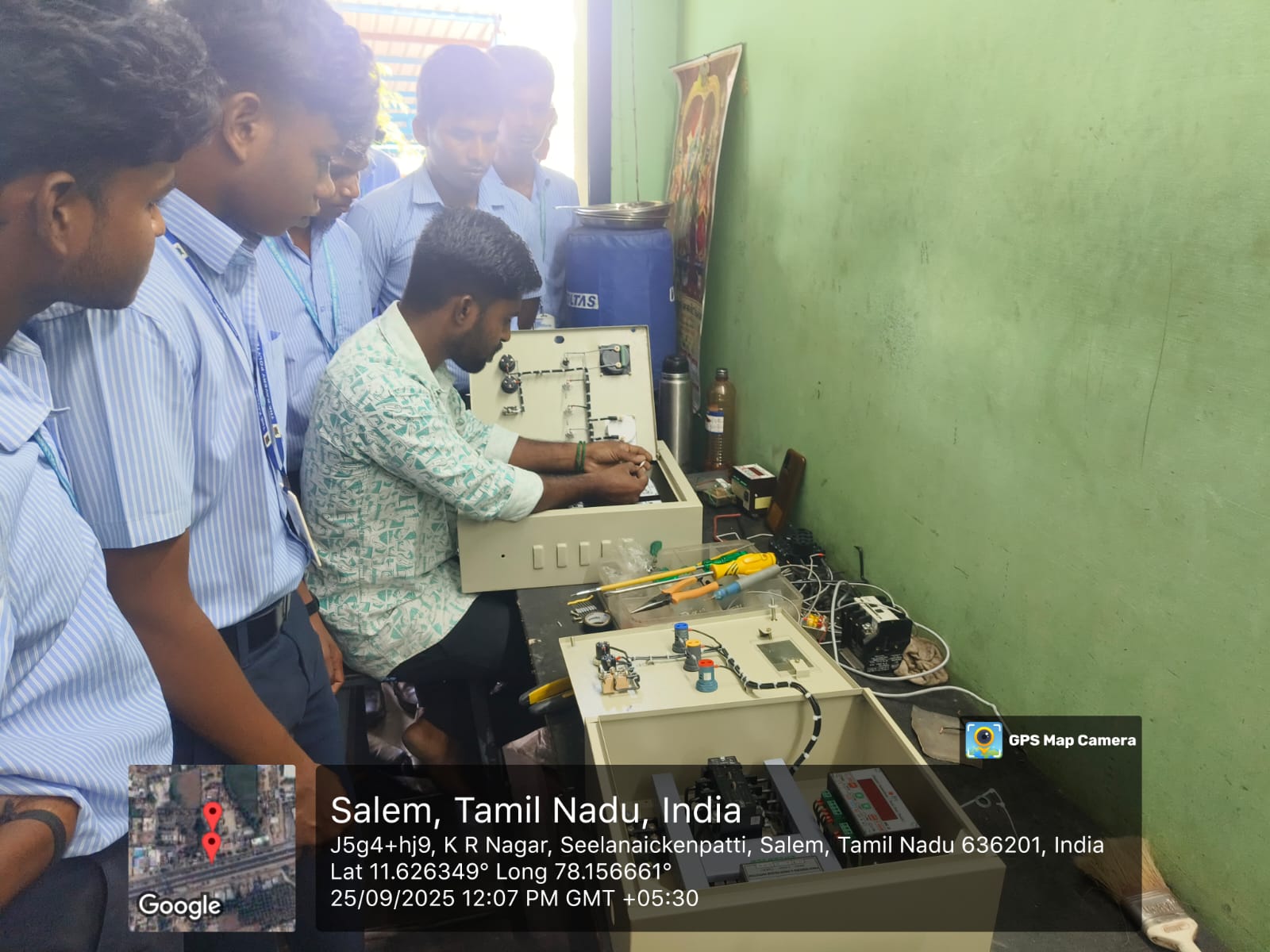
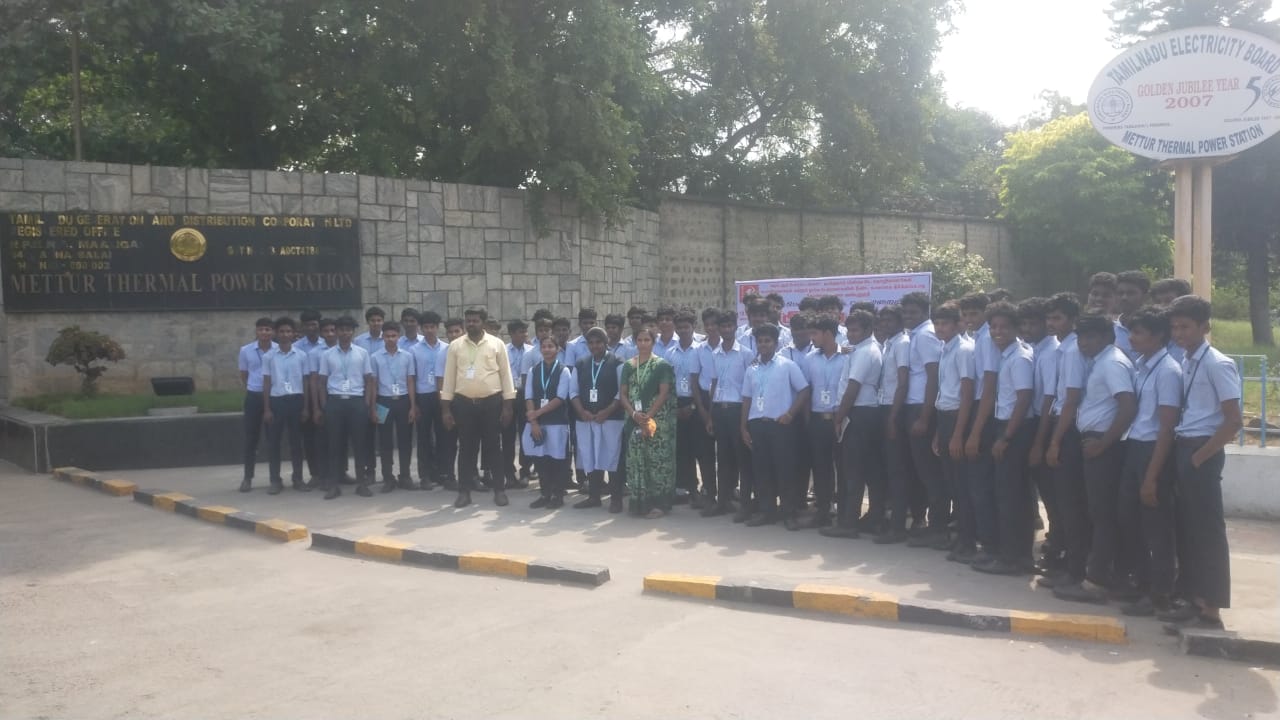
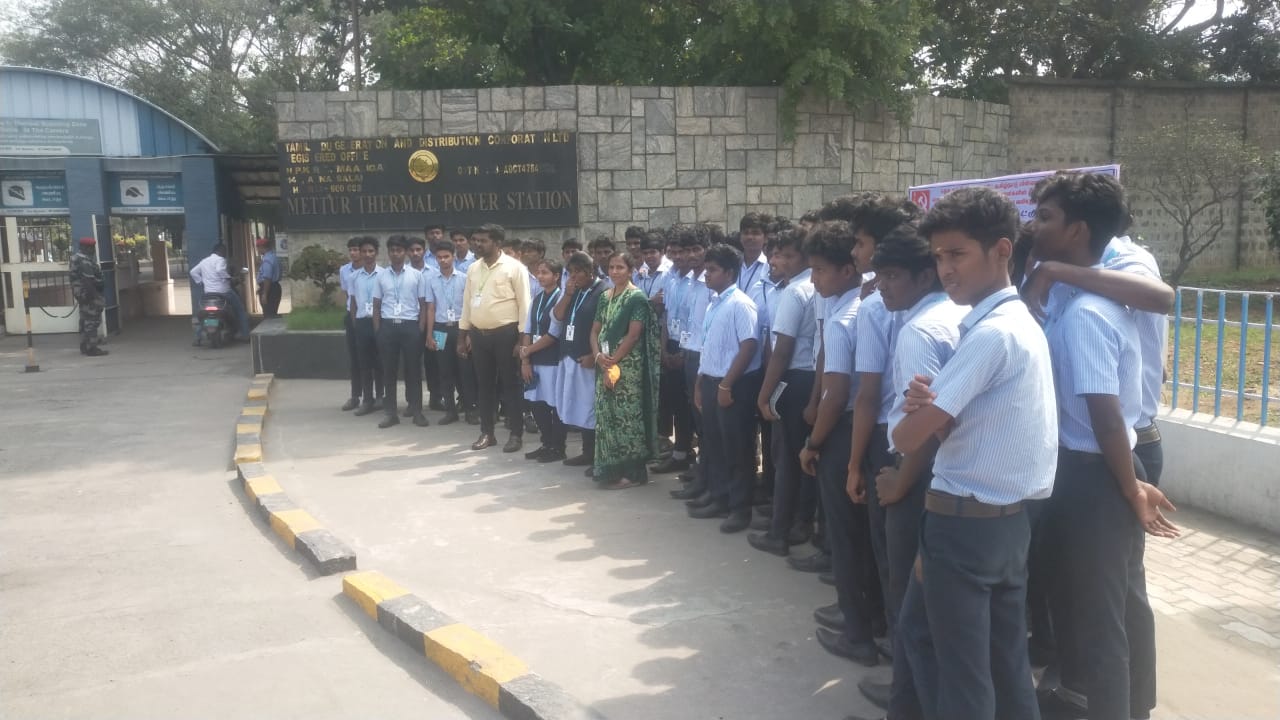
Our Department organized a one-day industrial visit for 2nd year students to the "METTUR THERMAL POWER PLANT" at Salem, with the aim of gaining practical exposure to power generation and industrial operations. During this visit the students observed the function of boilers, turbines, generators, and received detailed explanations from engineers about the working principles of a thermal power plant, safety measure and control systems. This industrial visit makes highly informative and beneficial for enhancing the students technical knowledge and awareness of industrial practices.
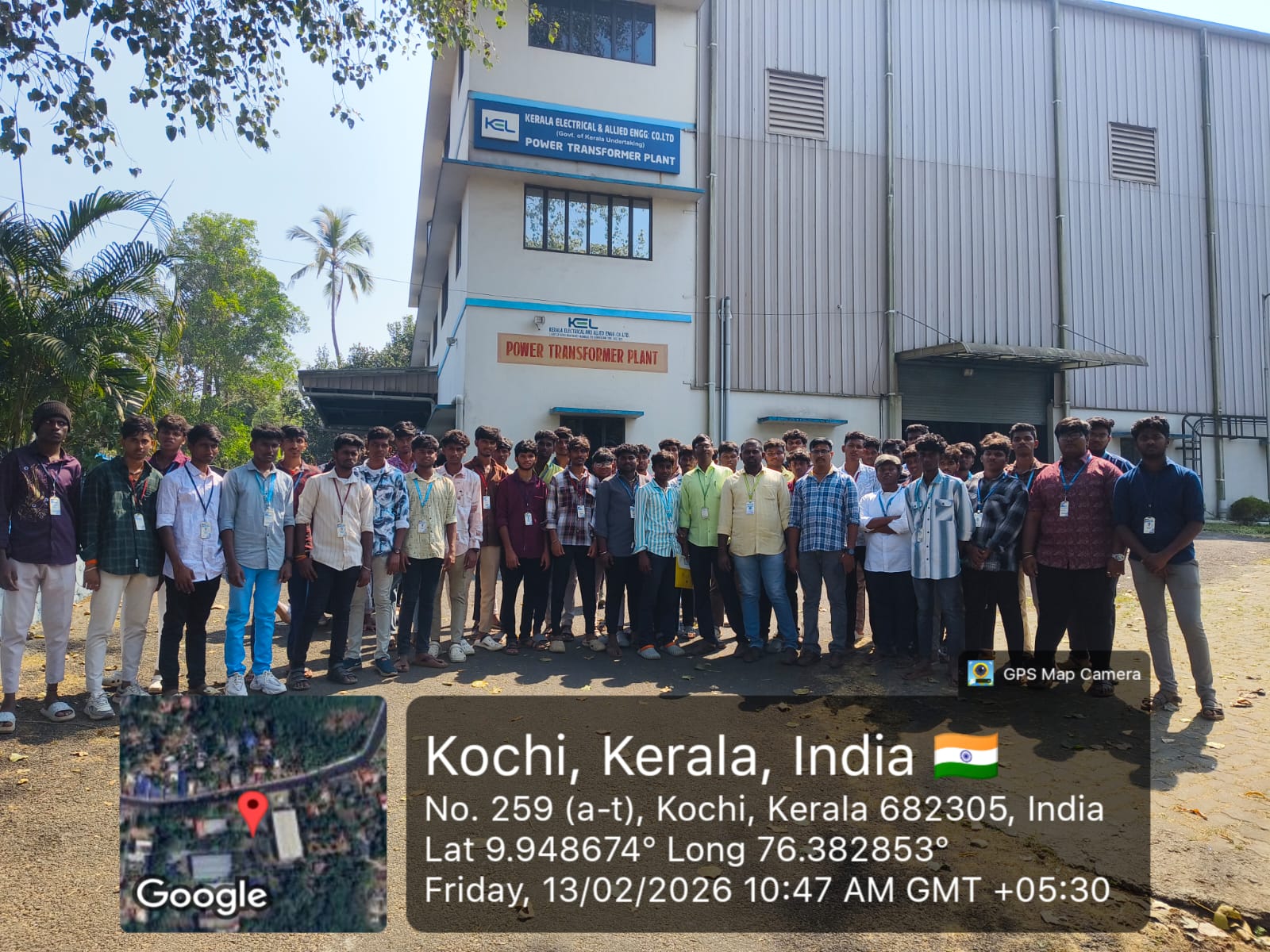
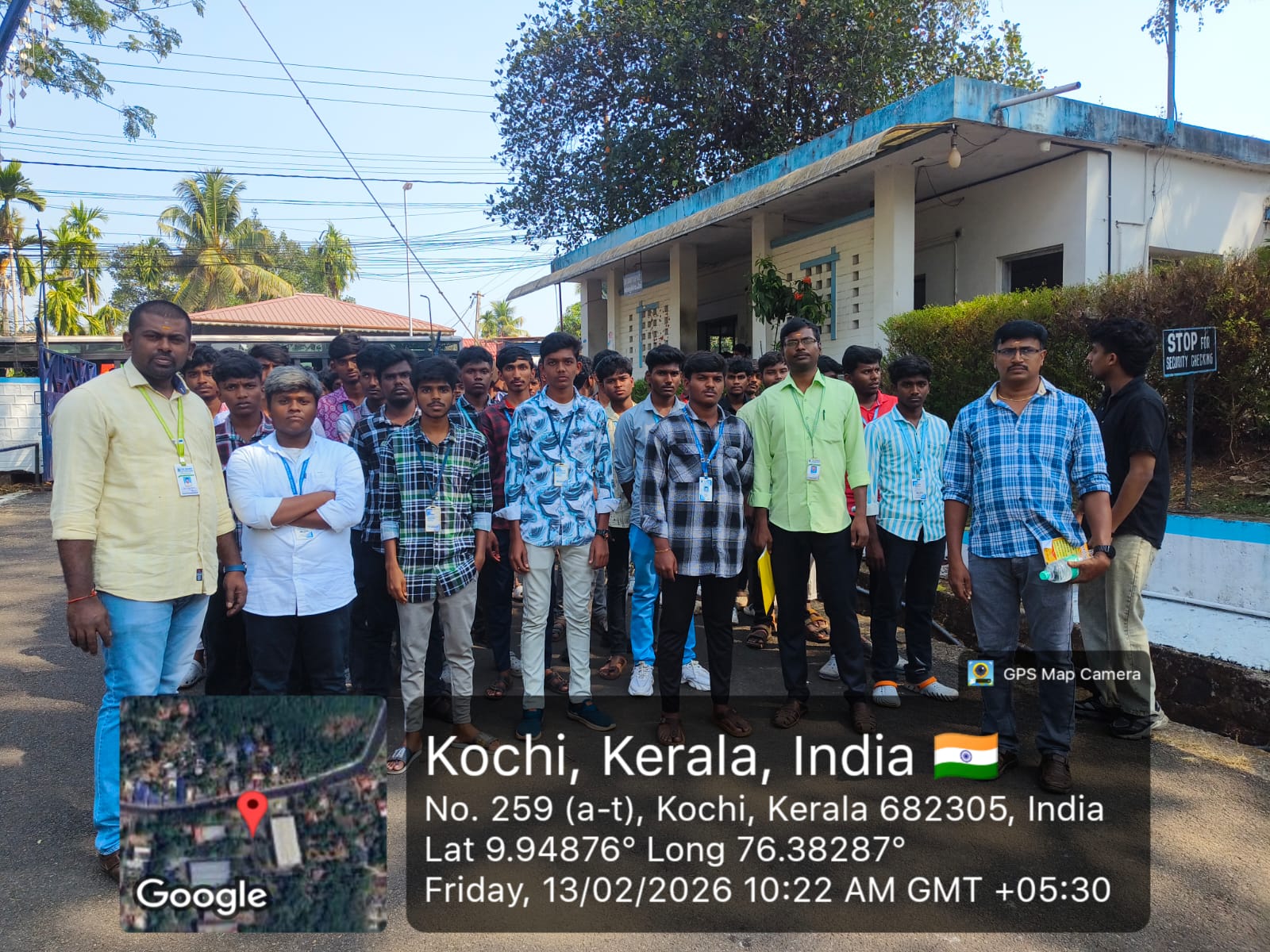
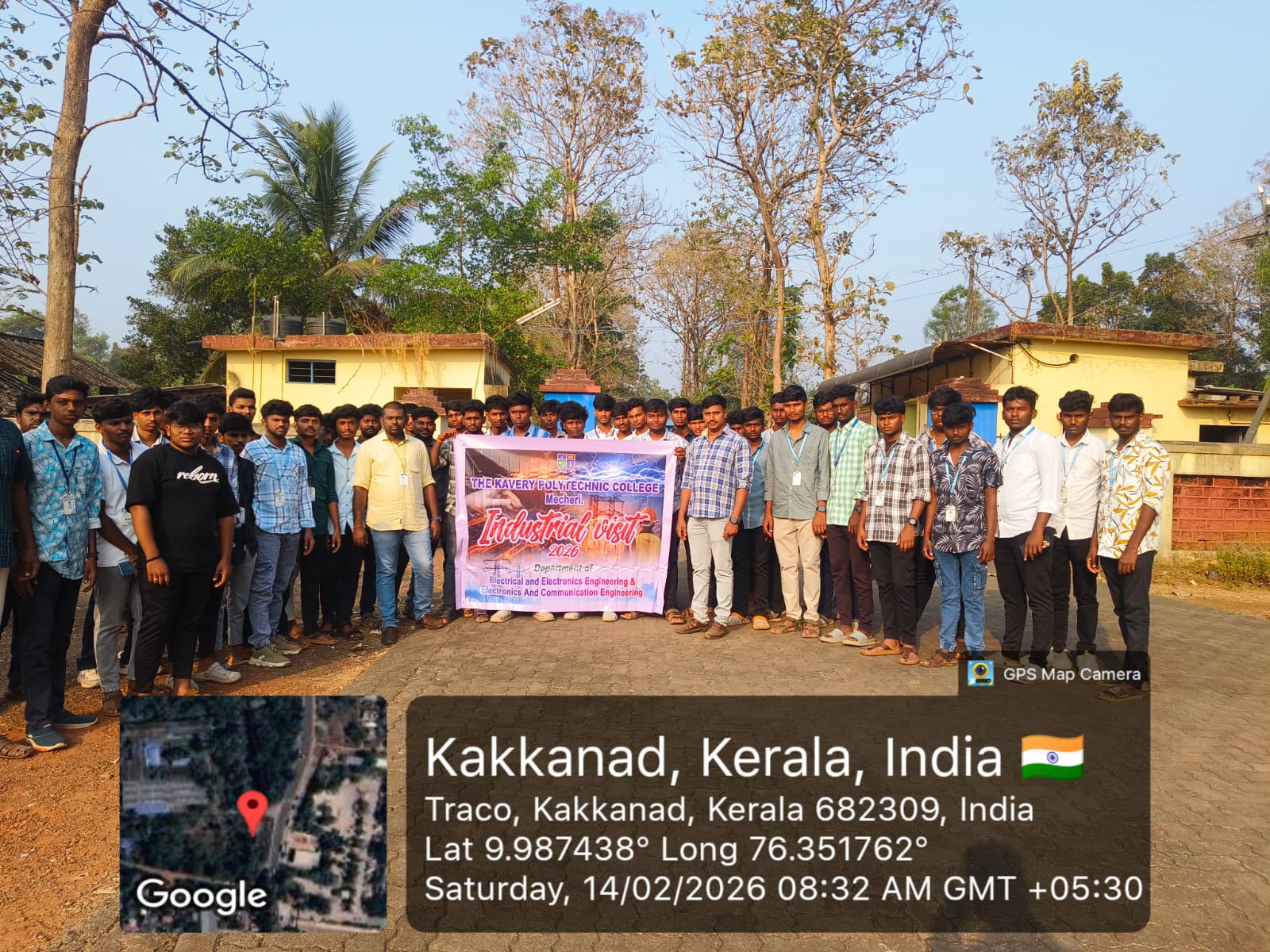
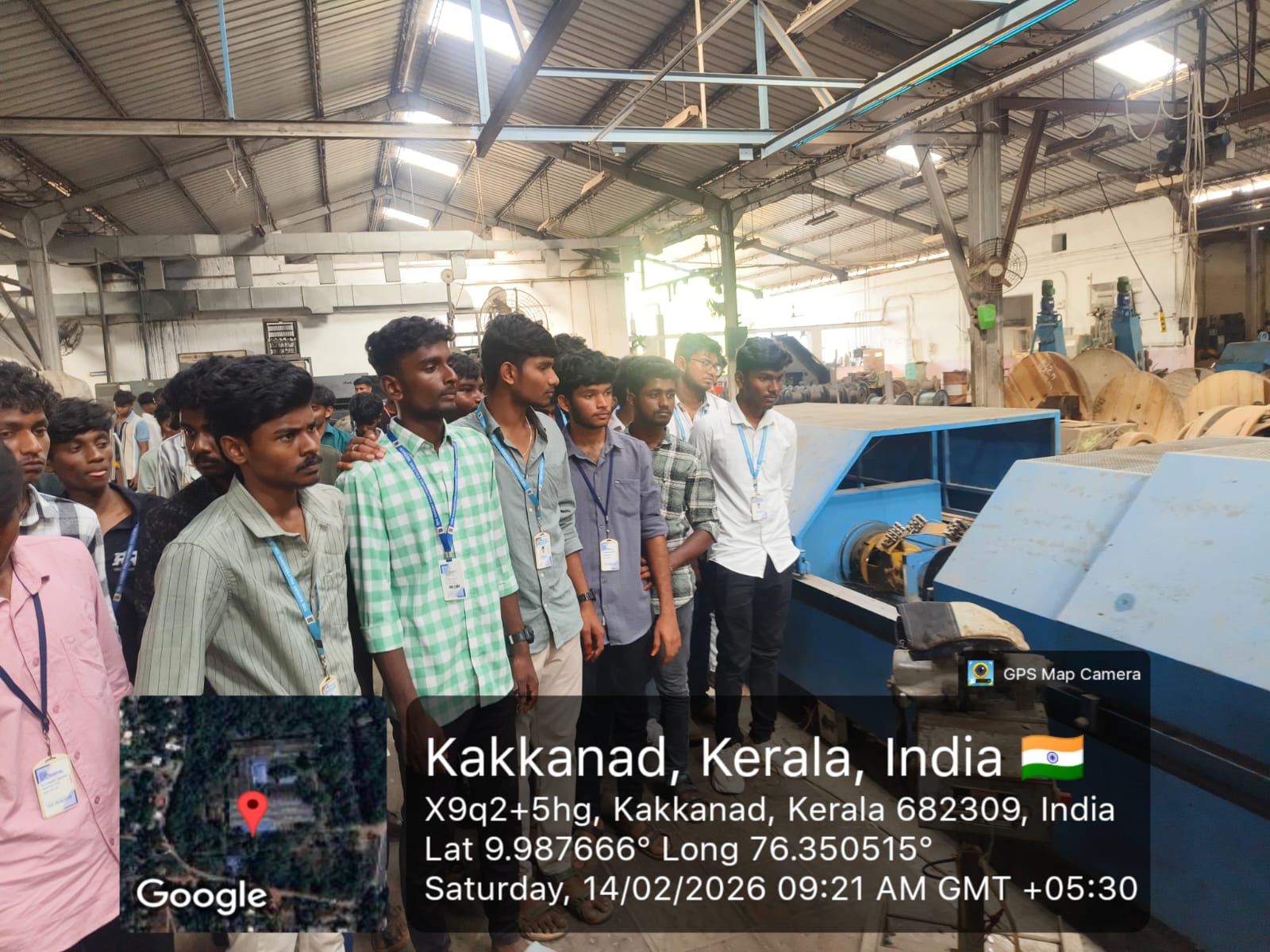
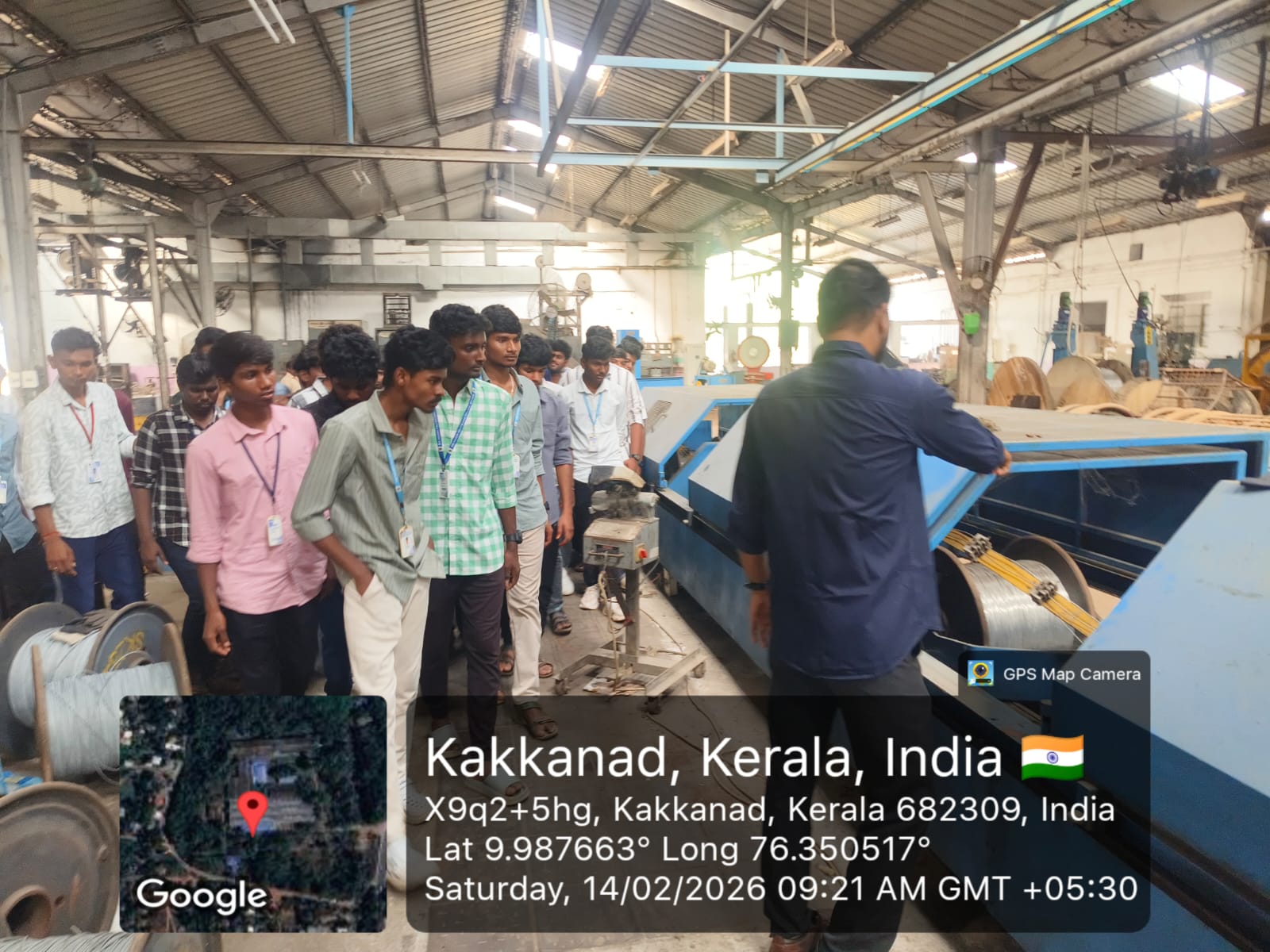
Our Department organized a two-day industrial visit for 3rd year students to the "KERALA ELECTRICAL AND ALLIED ENGINEERING CO.LTD, Mamala, Kochi and TARCO CABELS CO.LTD, Irimpanam, Kochi, with the aim of gaining practical exposure to industrial operations. During this visit the students observed the function of transformer making, testing, production of UG cables and HT cables. This industrial visit makes highly informative and beneficial for enhancing the students technical knowledge and awareness of industrial practices.
NSS Activities
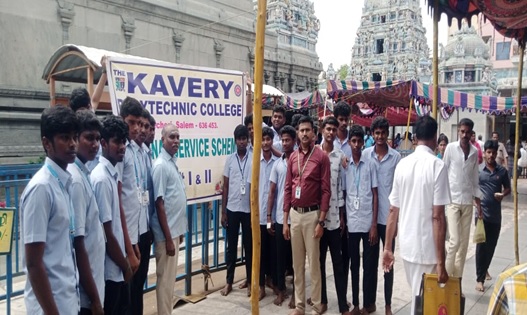
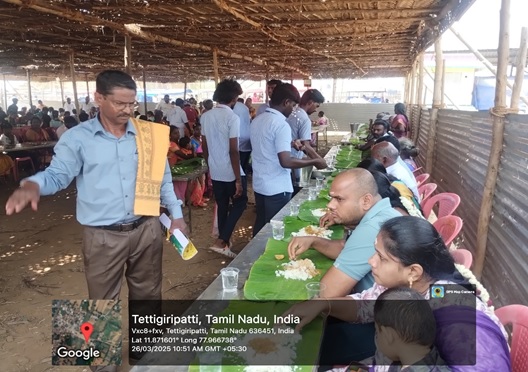
Our Department students went to the Batharakalli Amman temple on occasion of ammavasi pooja. They actively participated in this NSS camp and helped the temple management for crowd clearance and Annathanam distribution to the devotees on the temple on this occasion. By this the students gained knowledge of team work and handling process of common peoples.
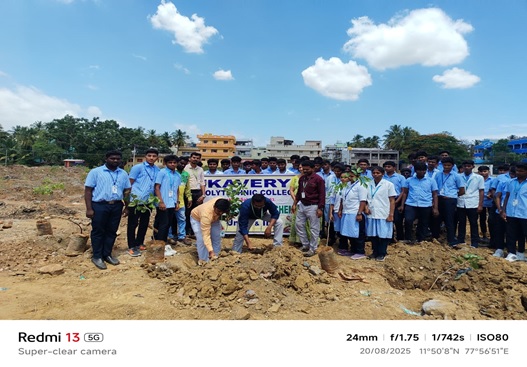
Our students participated in planting activity at mecheri conducted by Green World organisation and planted many tress across mecheri area to protect environment. This helps student to gain knowledge on planting process of trees and how tress helps to protect the environment. In this great occation our vice principal MR.Ranjithkumar sir planted the 1st tree and helped the students for planting process.
Our students participated in NSS activity for Drug Awareness Rally and created awareness to the students and public about the Drugs. The students actively participated in this rally.
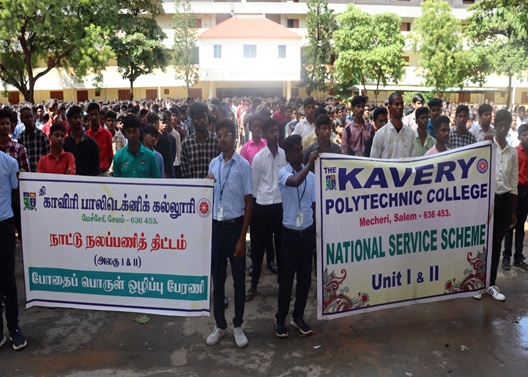
Our Department students actively participated in the NSS camp held at Thethigiripatty Mariamman temple. They showed the greater contribution in annathanam distribution and crowd clearance at the temple. By this the students gained knowledge of team work and handling process of common peoples.
Seminar
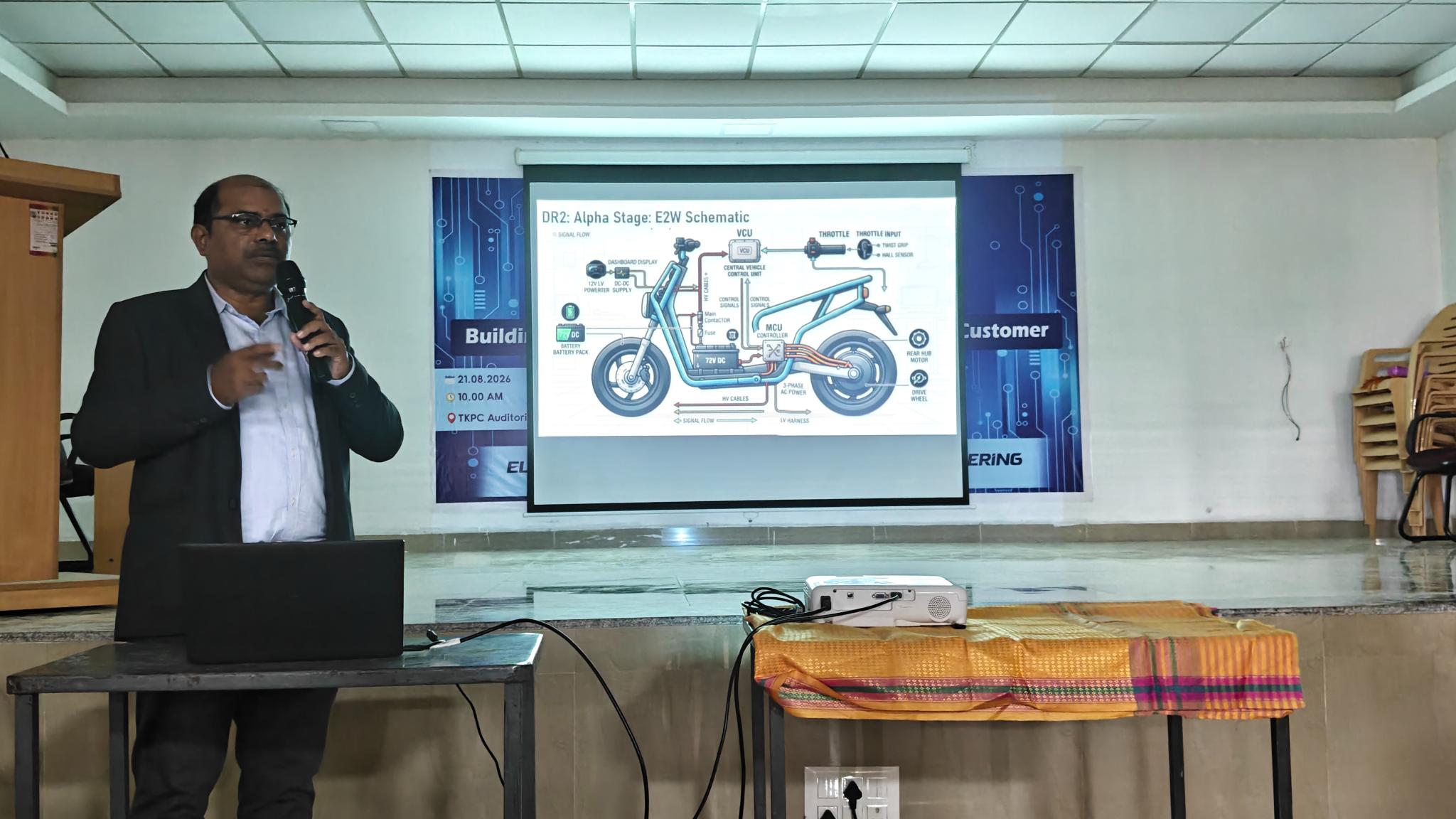
On 21.08.26, the seminar on "Building an Electric Two-Wheeler from Concept to Customer" was conducted by the Department of EEE and Chemical Engineering at The Kavery Polytechnic College, Mecheri. Our Secretary Prof. S.K. Elangovan sir honored the chief guest Mr. S. Soundarajan, Vice President of Numeros Motors, and he delivered the concept of an electric two-wheeler to the students.
The chief guest explained the major components used in an electric vehicle, the design and development process, the prototype development and testing, safety, certification, and customer requirements to the students.
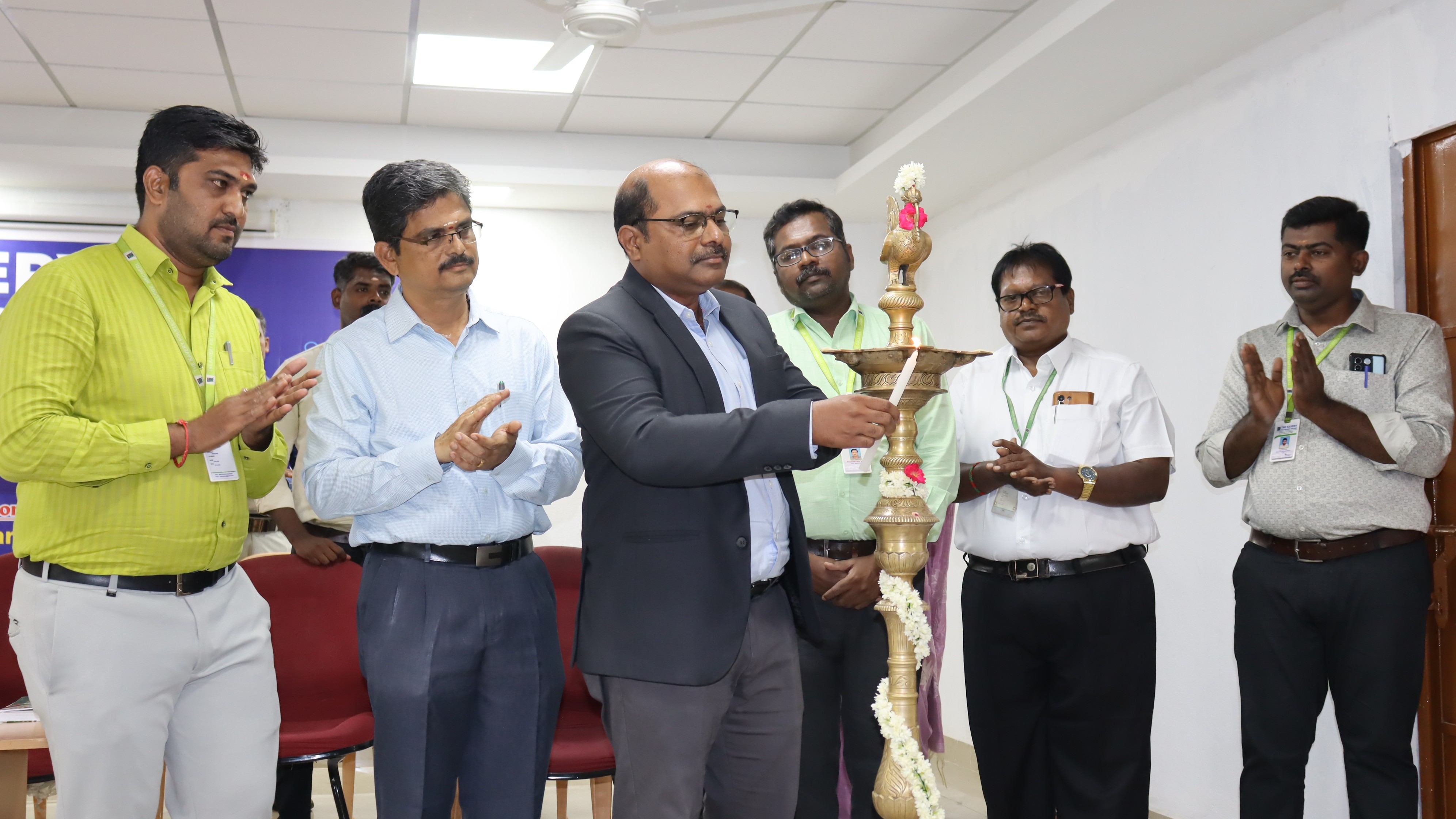
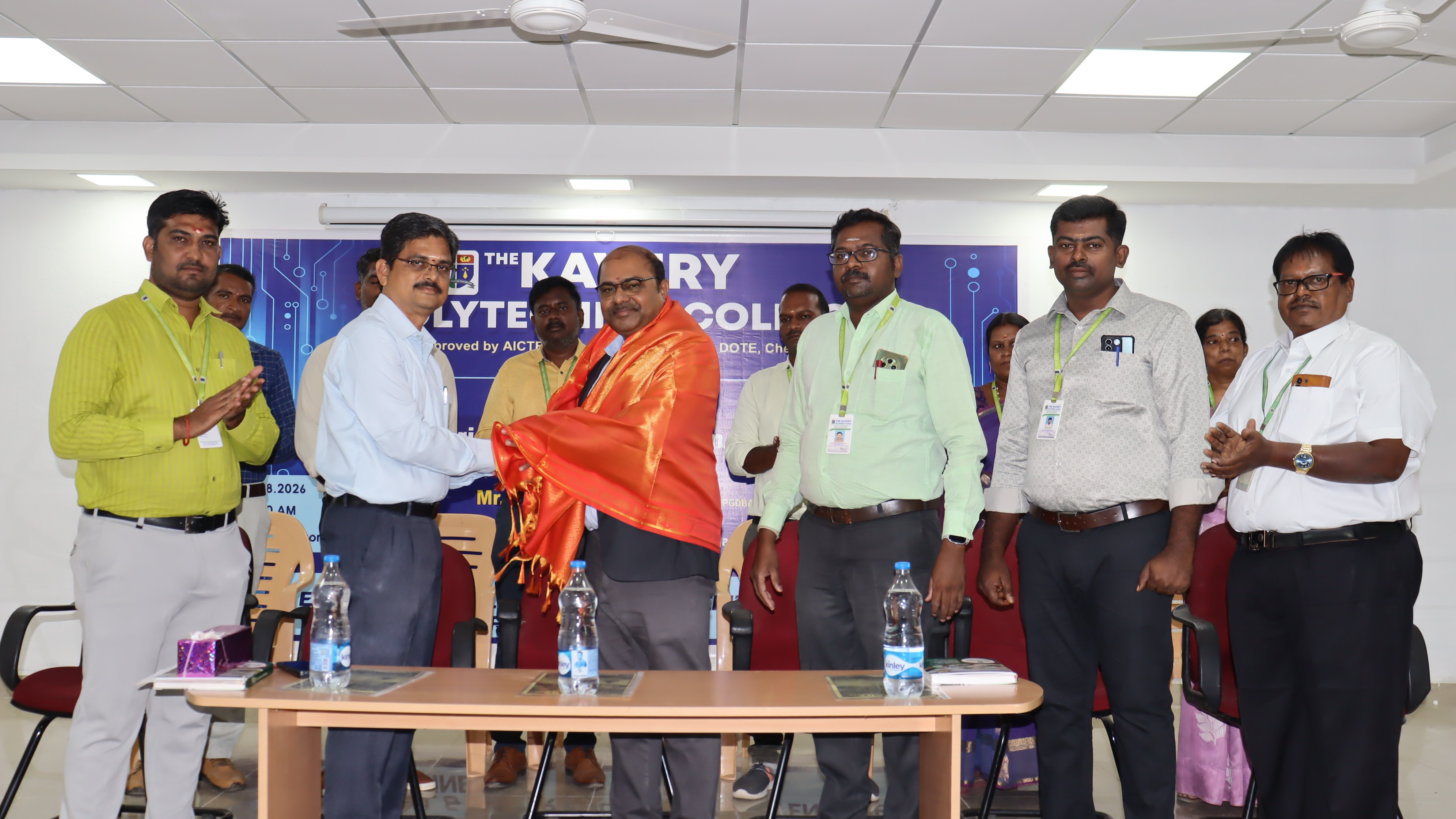
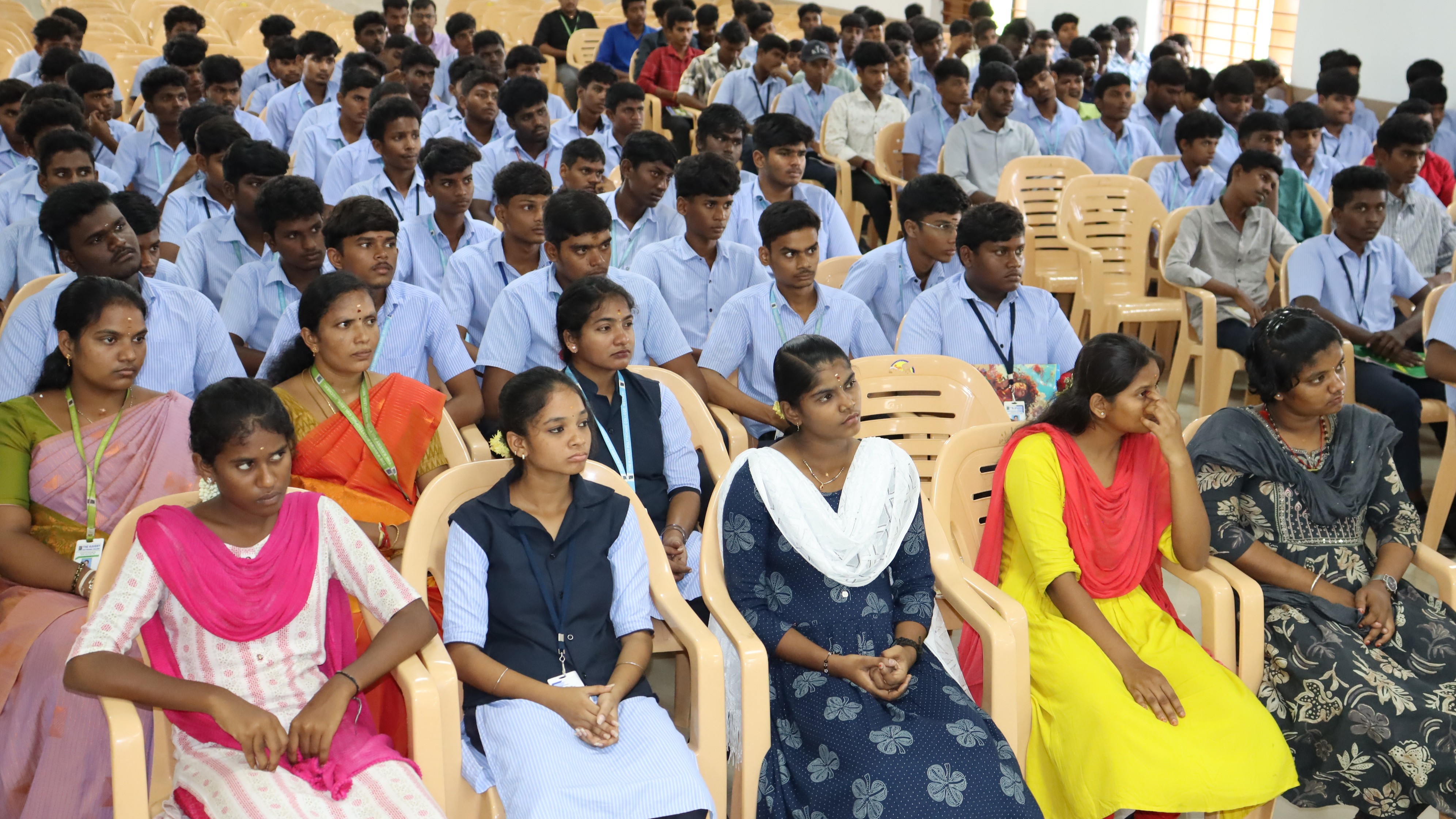
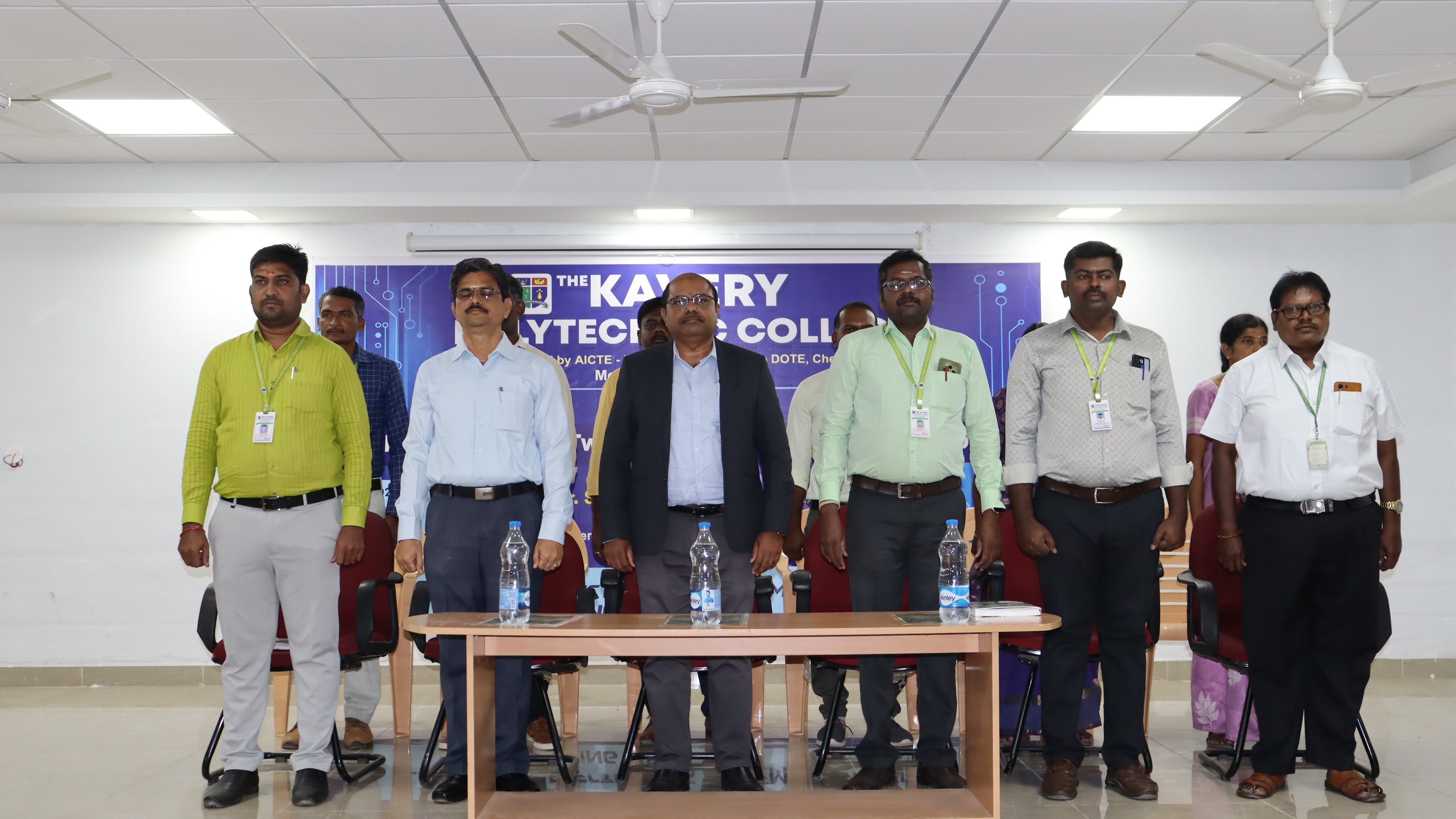
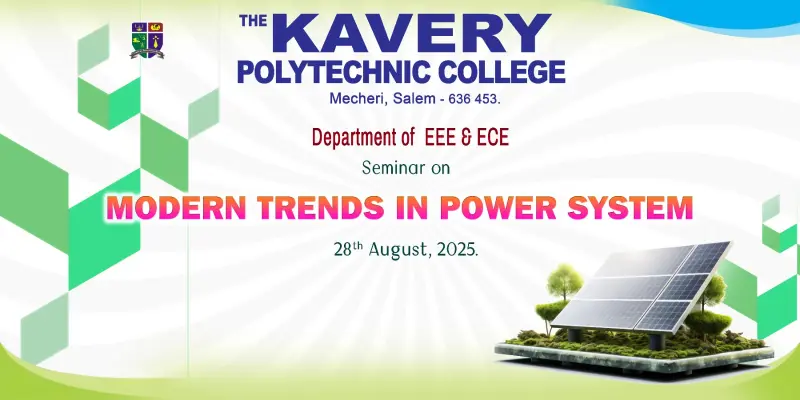
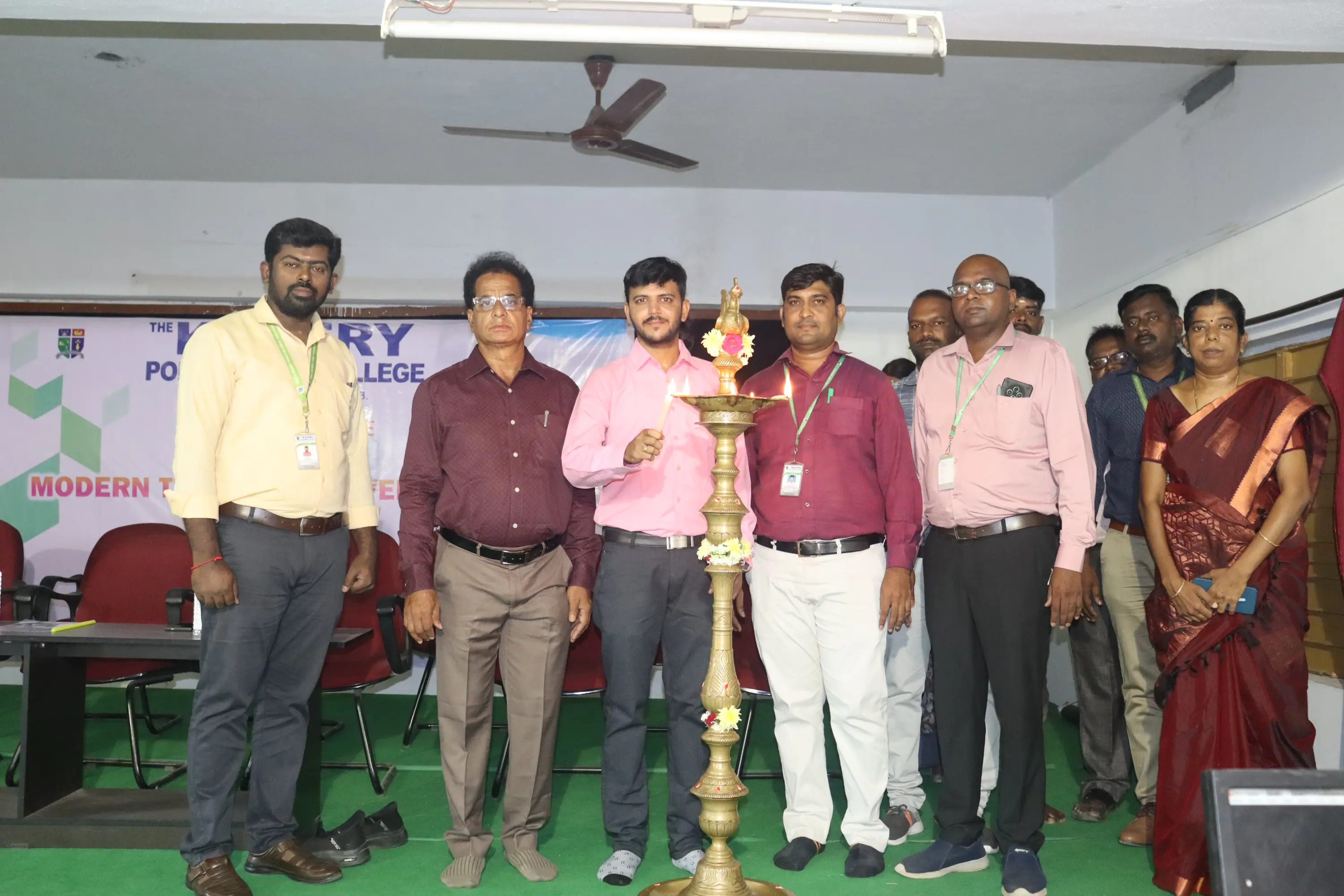
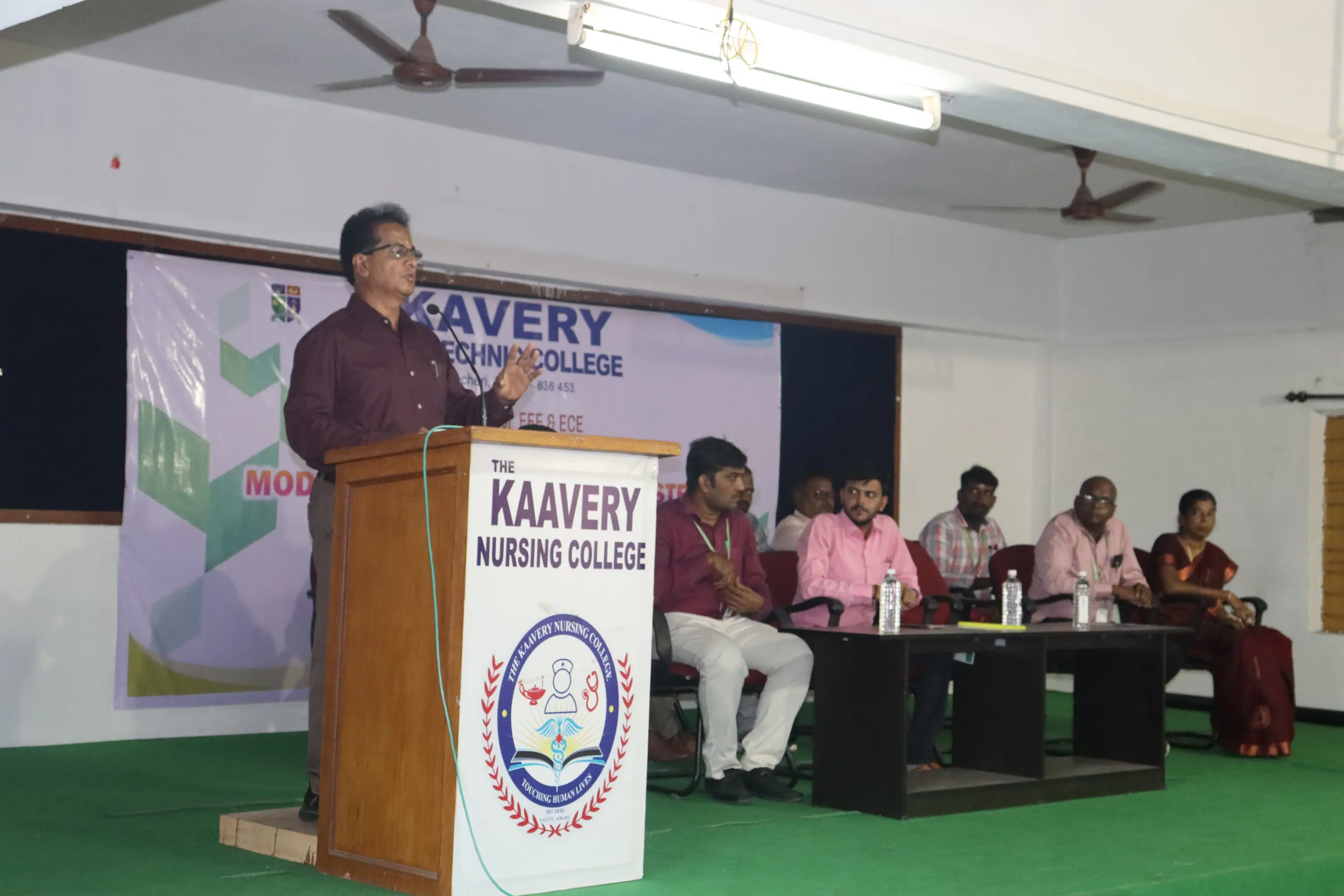
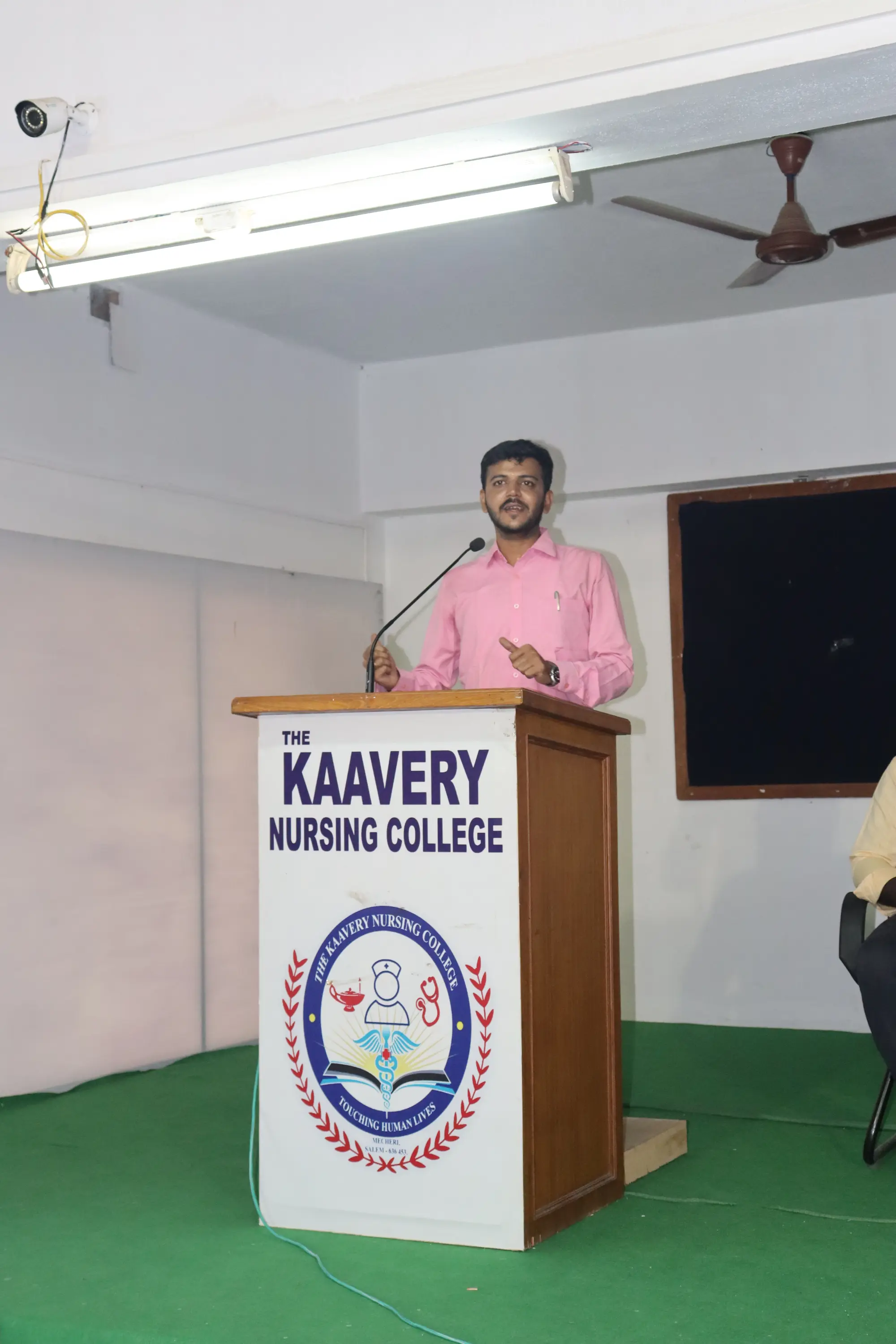
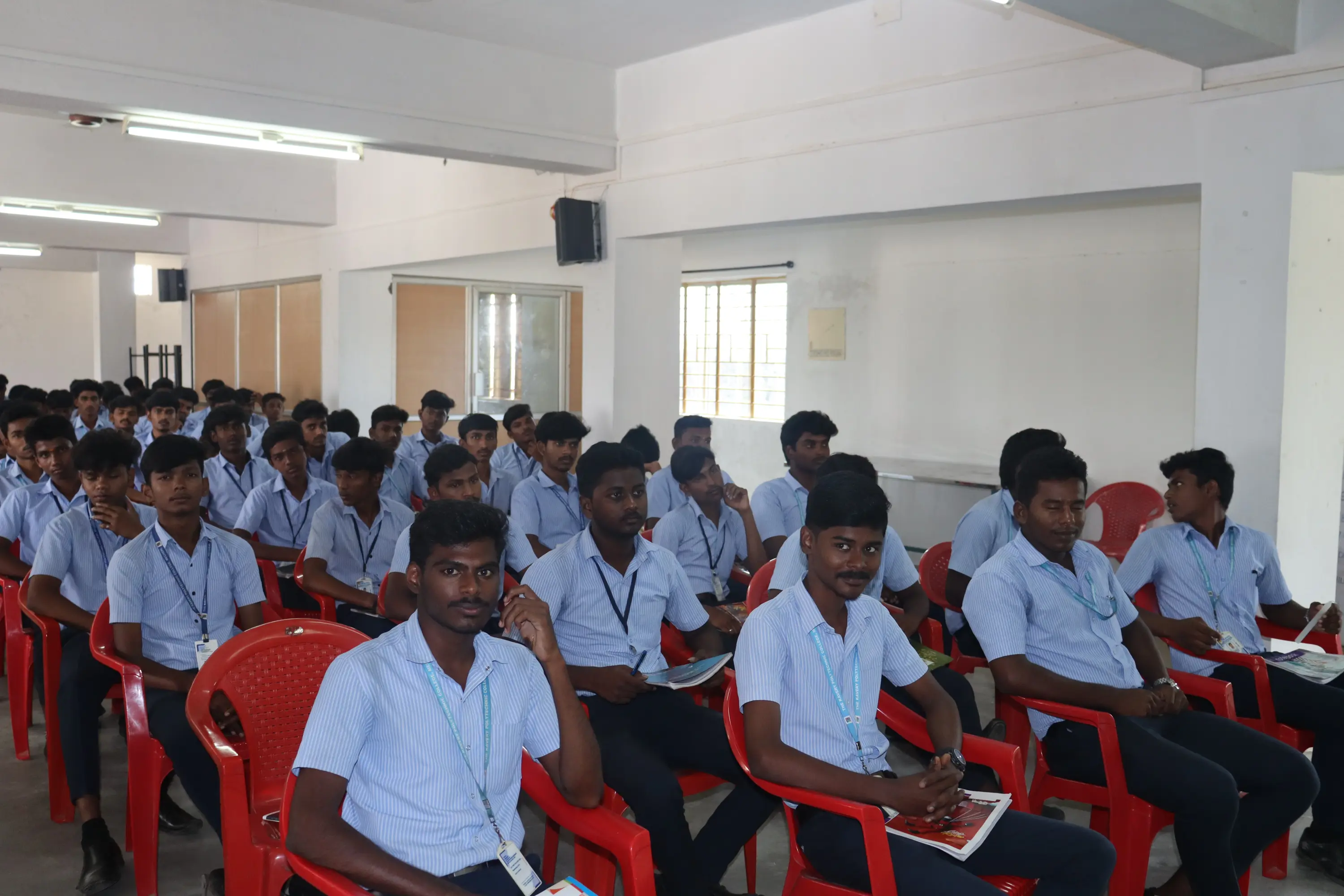
On 28.08.25, The seminar on "Modern Trends in Power System" was conducted by department of EEE at The Kavery Polytechnic college, Mecheri. Our Secretary Prof.S.K.Elangovan sir honoured the chief guest Er.S.Sabarinathan A.E/TNEB (Coimbatore south circle) and delivered the importance of Electrical Engineering to the students. The chief guest explained the various power plants in tamilnadu, the modern techniques arrived in power system and the jobs related to EEE on government sector to the students. Our Dean, Principal and HOD,s of various departments of polytechnic college felicitated the seminar program.
Syllabus
Download the complete syllabus for the Department of Electrical and Electronics Engineering.